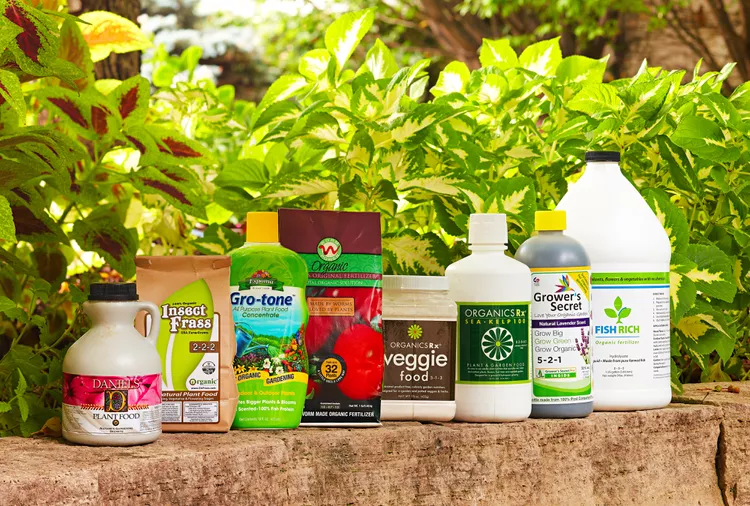
Even if your garden beds are rich in nutrients, most plants benefit from a regular application of fertilizer during the growing season. And houseplants also need feeding once in a while. But with all the fertilizers on the market, knowing which fertilizer to use can be a challenge. Liquid and granular fertilizers can both be used on indoor and outdoor plants, but these two fertilizer types offer different benefits and are used slightly differently. Here's what you need to know to feed all your plants correctly.
Pros and Cons of Liquid Fertilizers
You can find both conventional and organic liquid fertilizers made of natural materials, like kelp meal or fish meal. These products are usually applied by hand with garden sprayers, hose attachments, or watering cans.
Pros of Liquid Fertilizers
Because they are in liquid form, these fertilizers are easy to apply and they offer other benefits too, including:
- They’re easy to use. Unlike granular fertilizers, liquid fertilizers don’t need to be worked into the soil after application. Plus, liquid fertilizers are more mobile in soil and can spread underground to hard-to-reach plant roots.
- They’re readily absorbed by plants. Granular fertilizers must break down in water before plants can absorb them, but plants can take up liquid fertilizers immediately. If plants are struggling from nutrient deficiencies, liquid fertilizers offer immediate relief, and they can also rapidly boost the growth of healthy plants.
- Applications are uniform. Individual grains of granular fertilizers may contain uneven amounts of nutrients, while the nutrients in liquid fertilizers are evenly distributed in a liquid base. As a result, liquid fertilizers often provide more uniform coverage in the garden.
- They’re versatile. Liquid fertilizers can be applied at the base of plant roots or used as a foliar spray for even faster absorption. If you have delicate plants, you can dilute liquid fertilizers with water to make a fertilizer perfectly suited for light-feeding plants.
- They’re less likely to attract digging pests. Granular fertilizers can sometimes attract rodents that dig up garden beds. Liquid fertilizers don’t remain at the soil’s surface long, making them less appealing to animals.
Cons of Liquid Fertilizers
From easy application to quick absorption, liquid fertilizers offer a lot of perks, but they do have a few drawbacks, such as:
- They don’t last as long. Because liquid fertilizers are more likely to wash out of the soil with water, they must be reapplied more often than granular fertilizers.
- They can be pricier. Granular fertilizers can be easier on your budget since they are often sold in bulk and don’t need to be reapplied as frequently as liquid fertilizers.
- They’re less efficient in large gardens. It’s easy to apply liquid fertilizers to houseplants, container gardens, or small plots, but they are impractical to use in large garden spaces.
When to Use Liquid Fertilizers
If you start vegetable seeds indoors in spring, you can feed delicate seedlings with a diluted liquid fertilizer when they’re a few inches tall. Liquid fertilizers are also ideal for potted plants and container gardens since they’re less likely to build up in soils. You may also want to use liquid fertilizers as a quick plant pick-me-up if you notice your plants are struggling during the growing season or you see signs of plant deficiencies.
Since liquid fertilizers can be used as foliar sprays, they’re particularly beneficial for lettuce and leafy greens, although other vegetables also appreciate them. You can use liquid fertilizers on new transplants to reduce transplant shock and apply these fertilizers throughout the growing season at two- to four-week intervals to provide your plants with a regular source of nutrients.
While liquid fertilizers are easy to use, they shouldn’t be applied in hot weather or when the sun is high overhead. Instead, use liquid fertilizers in the early morning or evening to reduce the chances of leaf scorch.
Pros and Cons of Granular Fertilizers
Granular or dry fertilizers include both conventional and organic fertilizer options, such as bone meal, blood meal, and feather meal. However, some gardeners also consider compost and manure to be granular fertilizers. Granular fertilizers may come in pelleted form or coarse powders, but they’re usually applied by hand or with a broadcast spreader.
Pros of Granular Fertilizers
Since granular fertilizers break down over time, they provide a slow release of nutrients and offer particular benefits to gardens, including:
- They don’t need to be applied as often as liquid fertilizers. Granular fertilizers are less likely to wash away in the rain, so they don’t need to be applied as frequently.
- They provide ongoing support to plants. Because they remain in the soil longer, granular fertilizers sustain plants over extended periods, ensuring that plants always have the nutrients they need. This makes granular fertilizers particularly beneficial for heavy-feeding plants.
- They’re cost-effective. Because granular fertilizers are often sold in bulk, they’re usually more budget-friendly.
- They’re more efficient in large gardens. With a broadcast spreader, granular fertilizers can be easily spread over large garden plots and lawns.
Cons of Granular Fertilizers
While granular fertilizers certainly have some major advantages, they also have a few drawbacks, such as:
- They’re more likely to burn plants. Granular fertilizers are highly concentrated and can burn plant tissue when improperly applied.
- They are harder to apply. Granular fertilizer application takes longer because these fertilizers need to be worked into the soil.
- They aren’t absorbed as quickly. The nutrients in granular fertilizers are released little by little every time you water, so they don’t offer a quick nutrient boost to plants in need.
- They can attract pests. Animal-based fertilizers, like bone meal, may attract coyotes and other critters you may not want around.
When to Use Granular Fertilizers
Granular fertilizers are often too strong for indoor seedlings, but they are ideal for new garden beds. Pre-plant applications of granular fertilizers can be broadcast over gardens at the beginning of the season and then worked into the soil before seeds and seedlings are planted. Alternatively, granular fertilizers can be added to new planting holes prior to transplanting to give plants the nutrients they need to grow.
When applied as a top dressing at the beginning of the season, granular fertilizers provide sustained feeding for plants for weeks or months, but you can also reapply these fertilizers as a side dressing around heavy-feeding plants at six- to eight-week intervals. They’re particularly useful for slow growers like onions and fruit trees. Granular fertilizers can also be applied at the base of plants, like melons, when they begin to flower to encourage the plants to produce a larger harvest of fruit.
After application, granular fertilizers should be watered into the soil to make the nutrients they contain more accessible to plants. Also, keep in mind that granular fertilizers are concentrated and should never be applied directly against plant tissue. To avoid plant tissue burn, apply side dressings of granular fertilizer 3 to 6 inches away from plant stems and leaves and thoroughly mix top dressings of granular fertilizers into the top 3 to 4 inches of soil before planting seeds or seedlings.