Vertical gardening—think vertical plant wall—is one of the hottest garden trends, yet it's one of the oldest (have you ever grown a vine on a fence or trellis?). Vertical gardening elements can draw attention to an area or disguise an unattractive view. This gardening style is perfect for just about any outdoor or indoor space. Get started with our vertical gardening guide!
Vertical Gardening Basics
In vertical gardening, use structures or columnar trees to create garden rooms or define hidden spaces ready for discovery. Trellises, attached to the ground or in large containers, allow you to grow vines, flowers, and vegetables in vertical garden pots using much less space than traditional gardening requires.
Vertical gardening with upright structures can be a boon for apartment dwellers, small-space urban gardeners, or others with limited outdoor space. Indoors, you can grow small-stature houseplants as vertical gardens by creating living walls for a tapestry of color and texture that helps filter out indoor air pollutants.
In cold-weather climates, houseplants grown in vertical gardens add much-needed humidity in months when the furnace runs and dries the air out. Increasingly, hotels and office buildings are incorporating living walls and vertical gardens inside and outside. Although vertical gardens might need more frequent watering, they contribute to good air circulation.
Vertical Plant Wall
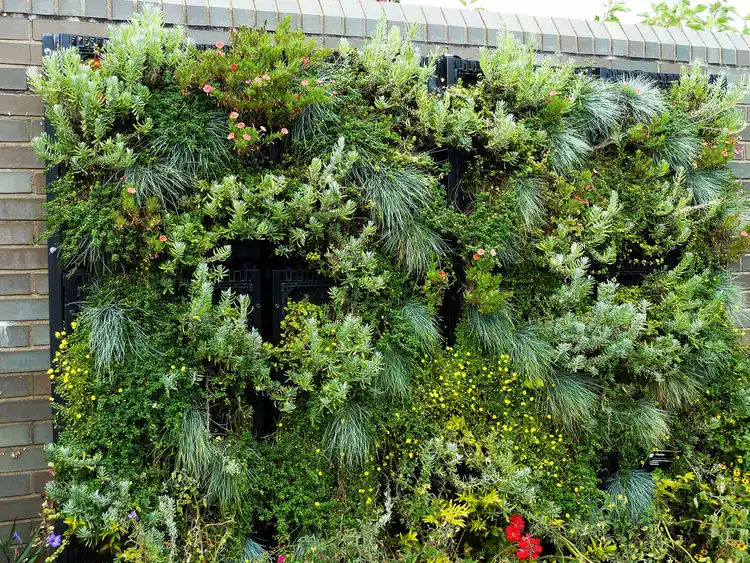
Green walls, another form of vertical gardening design ideas, are the latest fashion in gardening. Some are simply walls covered with climbing plants, while others involve a modular system that allows plants to grow inside the structures.
French botanist Patrick Blanc is credited as the father of green walls. He produced his first project on the exterior of the Museum of Science and Industry in Paris in 1988. Dozens of his other works are now installed worldwide, indoors and out. Blanc refers to his projects as living paintings or vegetal walls.
Creating a vertical plant wall or garden using Blanc's methods requires metal framing, a sheet of rigid plastic, and felt. The frame of the vertical plant wall can be hung on a wall, or it can stand alone. The rigid plastic attached to the frame makes the wall waterproof. The plants' roots grow in the felt, evenly distributing water and fertilizer. Plant selection depends on the light and other growing conditions.
Some plant wall systems include spaces for soilless potting medium so other types of plants can be grown, plus irrigation systems. Besides watering and fertilizing, vertical plant walls require other maintenance, including pruning, dusting, weeding, and, sometimes, plant replacement. Vertical plant walls or gardens are heavy, so check with a structural expert to make sure your wall can handle the load.
Vertical Gardening Considerations
Take these elements into account when gardening vertically outdoors:
- Anchor your vertical gardening structure before planting to avoid disturbing the roots or stems of plants. Pair heavy or more demanding plants with sturdier structures.
- Tall plants or structures cast shadows on the vertical garden that will affect the growing patterns of plants.
- Plants grow differently on a vertical garden. Some, such as climbing roses, need to be physically attached to structures, while others, such as morning glories, are twining and will loop themselves around trellis openings.
- Plants used in vertical gardening might need more frequent watering and fertilizing because they're exposed to more light and wind.
Vertical Gardening Plants
A wide variety of vertical garden plants are used on a vertical plant wall or garden, with plant selection determined by the light conditions. For traditional vertical planting, consider these selections:
Annual Vines
Annual flowering vines that climb without becoming too heavy include black-eyed Susan vine (Thunbergia alata), cardinal climber (Ipomoea x multifida), cypress vine (Ipomoea quamoclit), moonflower (Ipomoea alba), scarlet runner bean (Phaseolus coccineus), and hyacinth bean (Dolichos lablab). All grow best in full sun.
Perennial Vines
Easily grown perennial vines for vertical gardens include clematis hybrids, American bittersweet (Celastrus scandens), and ivy (Hedera selections). All grow best in full sun; clematis prefer to have their flowers in sun and their roots in shade.
Shady Vines
Vines for shade vertical gardening include hardy kiwi (Actinidia kolomikta), chocolate vine (Akebia quinata), Dutchman's pipe (Aristolochia macrophylla), and climbing hydrangea (Hydrangea petiolaris).
Edible Plants
Edibles that adapt well to vertical gardening include fruiting vines such as kiwi (Actinidia deliciosa), Siberian gooseberries (Actinidia arguta), edible flowers such as vining nasturtiums, and vertical garden vegetables including peas, squash, tomatoes, and pole beans.
Columnar Plants
Columnar plants provide vertical gardening interest. Many can be grown without a supporting structure. Consider planting columnar apple trees, arborvitae (Thuja occidentalis), junipers (Juniperus scopulorum), or Lombardy poplars (Populus nigra).
Vertical Herb Gardening
Grow a bountiful herb garden with many different species and varieties—even in a small space. Think of growing herbs vertically (rather than horizontally) to maximize your planting real estate. Utilize shelving, wall hangers, or hanging mechanisms to give individually potted herbs a place to be that's out of the way.
Vertical Gardening Structures
Fences, arbors, trellises, tuteurs, obelisks, and other types of structures make it easy to grow vertical garden plants. Hanging baskets can be considered elements of vertical planting because they break the horizontal plane of gardening. Attach a drip irrigation system for easy watering, or add a rope-and-pulley system to allow easier access to hanging baskets for watering and tending your vertical garden.
If you have an existing structure, such as a shed or garage, add a trellis in front of one of the walls so vertical garden plants have a structure to support their stems but don't cause any damage to the wall. Leave space between the trellis and the wall for air circulation.
You can create and build vertical gardening structures yourself. An invisible trellis works well indoors, as would a climbing willow frame. For outdoor vertical gardening, build a vegetable trellis for edible planting. This bean trellis will develop into a green arbor, adding a charming touch to your yard. Download our free trellis plan to get started on your vertical gardening project.