
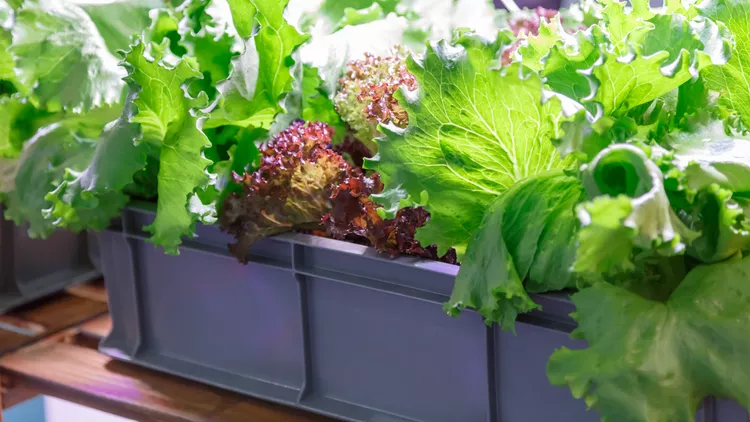
Spring may be a great time for planting vegetables outdoors, but growing lettuce indoors is easy any time of year. Like growing herbs indoors, all you need to do is provide the right indoor growing conditions, and you’ll be on your way to harvesting fresh lettuce from the comfort of your home. Whether you want to grow greens that are bitter, mild, tender, or crisp, some types of lettuce are better suited for growing indoors than others. Use this guide to find the best lettuces to grow inside, along with simple steps to growing lettuce indoors any time of year.
Best Types for Growing Lettuce Indoors
- ‘Green Oak Leaf': The frilly, green leaves of this loose-leaf lettuce are very easy to grow and tend to have a mild flavor and crunch.
- ‘Red Oak Leaf’: This loose-leaf variety is great for spicing up salads with its dark red leaves and slightly bitter flavor.
- Baby Leaf Varieties such as ‘Red Sails,’ ‘Refugio,’ ‘Parris Island,’ and ‘Defender’ can be harvested at an early stage of growth.
Step-by-Step Guide for Growing Lettuce Indoors
1. Choose Your Indoor Growing Space
Find the sunniest spot in your home that provides at least six hours of bright sunlight a day. Choosing an area near a south-facing window usually provides the best amount of sunlight for growing lettuce indoors. Keep in mind that lettuce plants should not be placed in direct sunlight during the hottest part of a summer day, or they'll burn. If you don’t have enough natural light, invest in grow lights that are specifically designed for indoor gardening.
2. Modify Growing Conditions
Lettuce prefers cooler temperatures, so you'll need to make sure the room in which you're germinating your seeds has a temperature between 55°F and 65°F. Seedlings should be grown between 50°F to 60°F to keep them from bolting (trying to flower). Warm growing conditions could cause the plant to bolt early, which makes the leaves taste unpleasantly bitter. It's also best to raise humidity levels around your plants because the air in your home is usually much drier than in most outdoor environments. Help prevent diseases when growing lettuce indoors by increasing air circulation with a small fan that will keep moist air moving gently around the plants.
3. Select a Suitable Container
Lettuce has a shallow root system, so it grows best in a medium-sized container. A container salad garden will do better in plastic than in terra-cotta pots because the clay will dry out the soil mix faster than the plastic. An oblong-shaped container is great for a short row of lettuces. If your container has no drainage holes, make a few small holes in the base before planting.
4. Use a Potting Mix for Vegetables
Plant your lettuce seeds in fresh potting mix that is designated for vegetable growing. This mix will have the right drainage and little, if any, fertilizer. You can also mix your own potting soil from equal parts bagged and sterile compost, perlite, and coarse sand. Starting lettuce seeds in a fresh potting mix helps minimize diseases, pests, and weeds.
5. Buy Lettuce Seeds or Seedlings
Lettuce seed is available throughout the year, or you can buy seedlings in cell packs from a garden center from spring to early summer. Remember to look for loose-leaf varieties, which are better suited to growing lettuce indoors than head types.
6. Plant Lettuce Seeds at a Shallow Depth
Fill the pot with soil so there's about one inch of space between the top of the container and the soil. Sow your seeds on top of the soil, making sure they're spread out instead of clumped together. Lettuce seeds require light to sprout, so either leave them sitting on top of the soil or lightly cover the seeds with potting soil.
7. Water the Seeds with a Mist Bottle
Use a mister bottle to spray the seeds with water daily so that the soil stays moist but not soaked. Watering the seeds directly with a watering can could cause them to sink deeper into the soil or wash to one side of the pot. Depending on the lettuce variety, you’ll start to see plants emerge when growing lettuce indoors in about one or two weeks.
8. Keep Lettuce Seedlings Well Watered
Once the plants emerge, continue to keep the soil moist but not soaked. Follow the best practices for watering houseplants to avoid overwatering when growing lettuce indoors. Remove excess water that may collect under your pot to prevent root rot.
9. Thin Out Weaker Seedlings
If several seedlings are sprouting close together, remove the weaker seedlings so that the stronger seedlings will have more room to expand to their full potential. Check the seed packet for your lettuce varieties' mature size, and make sure you space them out accordingly.
10. Harvest Lettuce Anytime
Snip lettuce leaves when they’ve grown to the size you want. If you prefer smaller lettuce leaves, cut them when they’re about 6 inches long. Avoid cutting the inner leaves of each lettuce cluster to allow the immature growth to continue developing into larger leaves for future harvesting.
Our Favorite Gardening Tools and Sources
The BHG editors have our favorite gardening essentials, which make our flowers and vegetables healthier and look great. We also love finding online sources for almost anything, including seeds. Self-watering planters take the worry out of missing a day due to work obligations or travel plans, and these watering wands are great for outdoor gardening when the flow of water has to be controlled, especially with newly blooming plants. A good pair of pruning shears is every gardener's best friend, so invest in the best you can and keep them clean and dry when you're finished using them.