
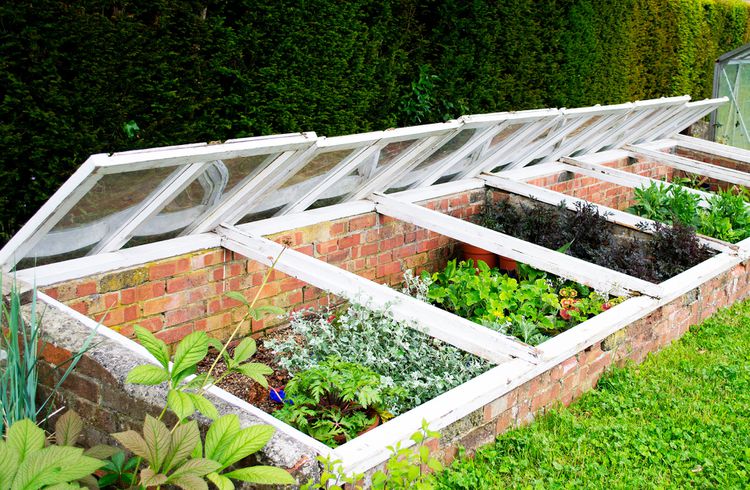
Fresh vegetable season doesn't have to come to an end as summer fades into fall. Sure, shorter days and lower temperatures mean that your tomatoes, beans, squash, and other heat-loving crops are pretty much done for the year. But there are plenty of other veggies that thrive in cooler weather. And by growing these edible plants in a cold frame, you can extend your harvests long into winter, even through frosts and freezes. Cold frames are very low-tech, just a box with a translucent covering. Think of it as an unheated mini greenhouse. With a little planning, this simple device can provide a bountiful harvest through the chilly days of winter.
What Does a Cold Frame Do?
Fall and winter vegetables, known as cold-season crops, grow best in cooler weather and even tolerate some freezing temperatures. What they don't like is widely-fluctuating extremes: warm, sunny days followed by frigid temperatures that come on quickly as soon as the sun goes down. Cold, drying winds can also wreak havoc on these crops. Cold frames moderate these extremes by capturing the sun's warmth during the day. Closing the cover at night helps retain that warmth. The sides and cover of the cold frame provide protection from wind, as well as heavy snow and ice.
Where to Use a Cold Frame
Cold frames are easy to build as a DIY project and require very few materials. Or you can buy a ready-made cold frame. Place your cold frame where it will get maximum sun exposure. Remember that the winter sun is lower in the sky, so avoid the shadow of trees or buildings.
If you grow your vegetables in raised beds, consider building a cold frame to sit on top of the bed. Otherwise, set the open bottom of the cold frame directly on the soil. Prepare the soil as you would for any vegetable crop, incorporating a bit of compost for nutrients and to improve the soil texture.
What to Grow in a Cold Frame
Among the best candidates for growing in a cold frame are leaf lettuce, spinach, kale, arugula, beets, carrots, chard, kohlrabi, scallions, parsley, and radishes, everything you need for a hearty salad! Select the crops that you and your family like best and that can be grown in the limited space of a cold frame.
In addition to the ground space, consider the height of the crops. Some varieties of kale, for example, may grow too tall for your cold frame. You may want to include some very cold-tolerant greens such as mache (corn salad), claytonia (miner's lettuce), and endive, particularly if you garden in very cold regions.
How to Use a Cold Frame
Plant your crops in late summer or early fall so that they will grow almost to maturity before the weather gets frigid. In most areas, that means your crops should be nearing full size by late November. After that, further growth will be limited. Once cold weather sets in, the cold frame acts like a big cooler or refrigerator that keeps your crops fresh until you harvest them.
After planting, water young plants as you would if they were growing out in the garden. Aim for even moisture, but not overly wet soil. As temperatures cool, the need for watering is significantly reduced.
You don't need to use the cover for your fall-planted, cold-frame crops until night temperatures start to dip below 40˚F. Once you start covering the cold frame, be mindful that most days you will need to lift the cover during the day, at least a bit, to vent the cold frame. On sunny days, the temperature inside a closed cold frame can get hot enough to ruin these cool-season crops, so always err on the side of venting too much than too little. Make this part easier on yourself by installing a mechanized vent opener that's temperature activated to automatically raise the cover when temperatures rise and close as the temperature drops so you never have to worry about it.
Once the weather turns cold, your crops won't need much maintenance other than venting and harvesting. Start harvesting early to thin out crops, allowing more space for the remainder to mature. As you harvest full-size plants and free up space in the cold frame, consider replanting seeds of lettuce and spinach for an early spring crop. Coordinating a steady, extended fall and winter harvest takes a little planning, but it's so rewarding to pluck fresh greens or dig frost-sweetened carrots and radishes for your winter salads.