• HOME
  • Container Gardens
  • Houseplants
  • Edible Gardening
  • Garden Design
  • Caring for Your Yard
  • Flowers
  • Pest & Problem Fixes
  • Trees, Shrubs & Vines
  • Landscaping
  • Garden Plans
  • Gardening Routine
  • Terms of Use
  • About Us
  • Privacy Policy
shadowspire.ccshadowspire.cc
  • HOME
  • Container Gardens
  • Houseplants
  • Edible Gardening
  • Garden Design
  • Caring for Your Yard
  • Flowers
  • Pest & Problem Fixes
  • Trees, Shrubs & Vines
  • Landscaping
  • Garden Plans
  • Gardening Routine
shadowspire.cc shadowspire.cc
shadowspire.cc » Edible Gardening » How Far Apart to Plant Tomatoes: 7 Tips for the Right Spacing
Edible Gardening

How Far Apart to Plant Tomatoes: 7 Tips for the Right Spacing

45.1K
451
148
How Far Apart to Plant Tomatoes: 7 Tips for the Right Spacing

A tiny tomato seedling grows exponentially in just a couple of months. And when you've got several seedlings, you need to know how far apart to plant tomatoes in your garden so they all can reach their full potential. Getting the spacing right results in healthier, more productive plants and an easier harvest—you won't have to fight through a jungle of stems to pluck a ripe fruit. Use the following tips to help you figure out how far apart to space your tomato plants, depending on the type.

1. Know Your Tomato Plant

Tomato plant spacing depends on the type of tomato. Tomatoes plants are in one of two groups based on their growth habit: determinate or indeterminate. Determinate varieties are smaller, compact plants that grow to a certain height, stop, then flower, and set all their fruit in two to three weeks. Indeterminate plants grow, flower, and fruit for months until they are killed by frost.

Compact determinate tomato varieties, such as ‘Patio’, require much less space than a vigorous indeterminate grape tomato, such as ‘Valentine’. If you don’t know whether your variety is determinate or indeterminate, see the plant tag or check online sources.

2. Don't Crowd Determinate Tomatoes

Most paste varieties, patio, and compact selections, and some slicing tomatoes are determinate. These cultivars fruit best when planted 2 to 2 ½ feet apart. Even though they need just 2 to 3 feet between plants to grow well, they need the full amount of space. Don’t be tempted to skimp on spacing to squeeze in more plants, or disease will become more prevalent, and fruit production will suffer.

3. Cage or Stake Indeterminate Tomatoes

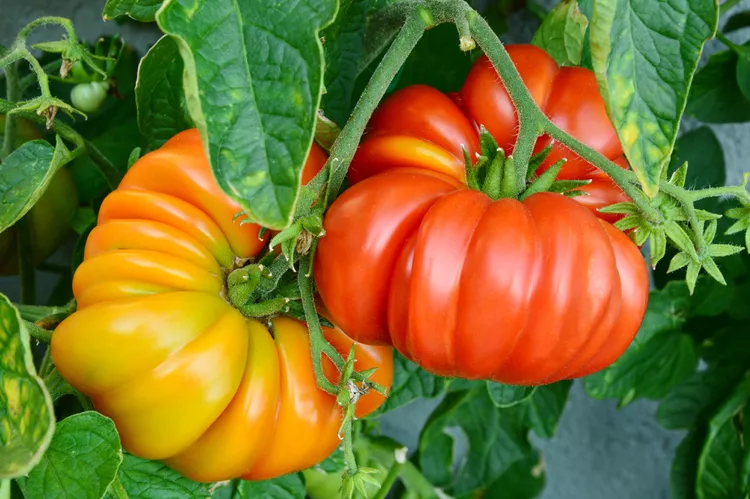
Many grape and cherry tomato varieties, along with most heirloom tomatoes and some slicers, are indeterminate varieties. These types of tomato plants naturally sprawl on the ground as they grow, which requires more space, and disease is more common because plants are constantly in contact with the soil.

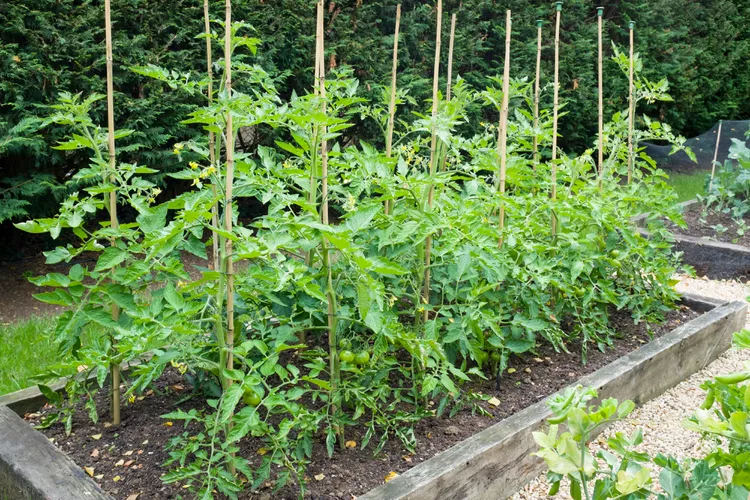
Cage or stake tomato plants to grow them in less space and keep them healthier. Put stakes or cages in place at planting time and train wayward stems to grow up by threading them through the cage or tying them to the stake weekly. When using cages or stakes, plant each tomato 2 ½ to 3 feet apart.

4. Give Uncaged Indeterminate Tomatoes Lots of Room

Indeterminate tomatoes left to sprawl naturally on the ground need plenty of room to expand their stems. Plan to space them at least 4 feet apart. While that may seem like a vast expanse when starting with tiny seedlings, know that these productive plants will creep and crawl several feet by the end of the season.

5. Leave Enough Space Between Rows

It is easy to overlook spacing between rows after establishing proper spacing between plants in a row. Space rows of most tomato plants 4 feet apart. Generous spacing between rows makes for easy harvesting and good airflow between plants. Plant indeterminate tomato varieties that are not caged in rows at least 6 feet apart so you still have room to walk between them toward the end of the season.

6. Use a Tape Measure

A tape measure eliminates the guesswork when figuring out how far apart to plant tomatoes. You'd likely be surprised by how off spacing can be when just eyeballing it. Plus, it is too easy to cheat the spacing plan to make room for just one more plant when not using a tape measure to clearly define proper plant space.

7. Select Small Varieties to Save Space

When growing tomatoes in a container or small space garden, count on compact varieties to produce plenty of fruit while requiring only about 2 feet of space. Cherry-size tomatoes for small spaces include ‘Patio Choice Yellow’, ‘Tidy Treats’, ‘Tiny Tim’, and ‘Tumbler’. Slicing tomatoes for small spaces include ‘Bush Early Girl’, ‘Golden Jubilee’, and ‘Patio’.

Frequently Asked Questions

  • I planted my tomato plants too close. What can I do now?

    If you planted the tomatoes within the last two weeks, it’s not too late to move them. Dig them up and replant at the proper spacing. If they have been in the ground for more than two weeks, plan to selectively prune excess foliage throughout the growing season.

  • How do I space tomatoes in a raised bed?

    Apply the same spacing principles to raised bed planting as in-ground planting. Raised beds are an excellent place to grow tomatoes when the plants have ample space. Stake the tomatoes to maximize your growing space.

Related Posts

40.9K
408
163

19 Rabbit and Deer-Resistant Container Plants for Your Garden

1.1K
84
21

7 Must-Know Tips for Overseeding Your Lawn

34.6K
3.5K
1.3K

The Plant Food That Saved My Roses Is Almost at My Local Flower Shop, but It’s at Amazon Right Now

13.9K
277
124

How to Deadhead Flowers for the Longest Blooming Plants

32.3K
2.6K
439

How to Plant and Grow Crossvine

16.5K
822
378

6 Surprising Benefits of Planting Trees

20.9K
1.5K
365

10 Native Alternatives to Invasive Plants Growing in Your Garden

43.4K
3K
576

How to Plant and Grow Horsetail

4K
239
74

How to Make a Garden Water Feature Out of a Pot

40.6K
2.8K
653

How to Plant and Grow Papyrus

5.7K
169
65

8 Small Front Yard Landscaping Ideas to Make the Most of Your Space

18.1K
1.6K
634

How to Plant and Grow Tufted Hair Grass

6.4K
572
97

How to Grow and Care for African Violet

33.6K
1.3K
416

How to Harvest Mint, Dry Mint, and Store Mint

13.8K
1.2K
532

12 Tips for Growing Lettuce in Containers from Seed to Salad

35.2K
1.4K
521

How to Plant and Grow Chayote

9.9K
495
103

15 Simple Vegetable Garden Ideas and Tips for Boosting Your Harvest

48.3K
4.3K
434

17 Deer-Resistant Shade Plants That Will Brighten Up Your Garden

41.4K
2.9K
1.2K

How to Make a Vinegar Weed Killer to Use on Walkways and Driveways

8.6K
513
133

4 Seed Starter Pots You Can Make with Upcycled Household Items

19 Rabbit and Deer-Resistant Container Plants for Your Garden
7 Must-Know Tips for Overseeding Your Lawn
The Plant Food That Saved My Roses Is Almost at My Local Flower Shop, but It’s at Amazon Right Now
How to Deadhead Flowers for the Longest Blooming Plants
How to Plant and Grow Crossvine
6 Surprising Benefits of Planting Trees
10 Native Alternatives to Invasive Plants Growing in Your Garden
How to Plant and Grow Horsetail
How to Make a Garden Water Feature Out of a Pot
How to Plant and Grow Papyrus
8 Small Front Yard Landscaping Ideas to Make the Most of Your Space
How to Plant and Grow Tufted Hair Grass
How to Grow and Care for African Violet
How to Harvest Mint, Dry Mint, and Store Mint
12 Tips for Growing Lettuce in Containers from Seed to Salad
How to Plant and Grow Chayote
15 Simple Vegetable Garden Ideas and Tips for Boosting Your Harvest
17 Deer-Resistant Shade Plants That Will Brighten Up Your Garden
How to Make a Vinegar Weed Killer to Use on Walkways and Driveways
4 Seed Starter Pots You Can Make with Upcycled Household Items
shadowspire.cc ©2025
  • Terms of Use
  • About Us
  • Privacy Policy