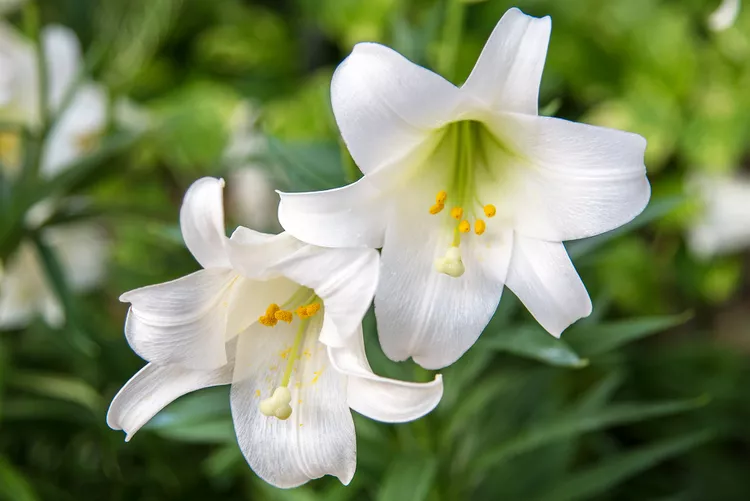
Like clockwork, Easter lilies (Lilium longiflorum) appear in grocery stores and flower shops in the spring. Their trumpet-shape, pure white blooms always look fresh and elegant, and they can fill a room with their sweet scent. Frequently, when the flowers of these potted lilies fade, the plants are discarded, but with a little TLC, you can keep them around and add them to your flower beds, where they’ll likely bloom again for years to come. Here’s what you need to know to get the most out of these easy-to-grow bulbs, both as potted plants and in the garden.
Easter Lily Overview
| Genus Name | Lilium longiflorum |
| Common Name | Easter Lily |
| Plant Type | Bulb, Houseplant, Perennial |
| Light | Part Sun, Sun |
| Height | 2 to 3 Feet |
| Width | 1 to 2 Feet |
| Flower Color | Pink, White, Yellow |
| Foliage Color | Blue/Green |
| Season Features | Spring Bloom, Summer Bloom |
| Special Features | Cut Flowers, Fragrance, Good for Containers |
| Zones | 4, 5, 6, 7, 8 |
Where to Plant Easter Lilies
In the garden, Easter lilies grow best in USDA Hardiness Zones 4—8. The bulbs require well-draining, rich soil with regular moisture throughout the spring growing season. Because of their large flowers and eventual garden height of about 3 feet, they tend to flop over, so place them where they can lean against other plants yet still get plenty of sunshine. Bamboo stakes and grow-through plant supports are also options.
According to the FDA, all parts of an Easter lily are toxic to cats, causing kidney failure that requires vet care. Even the pollen that might get on your cat’s fur and be licked off when the animal cleans itself is toxic.
How and When to Plant Easter Lilies
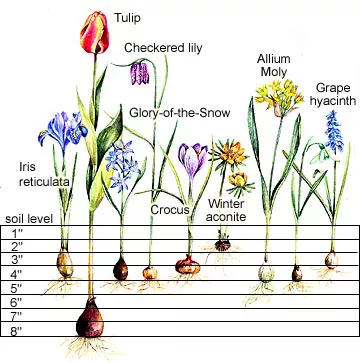
Plant the bulbs in the fall, a few weeks before your area’s first frost date, to allow for root growth. A rule of thumb is to bury them twice the depth of the bulb to keep the plant firmly in the ground during the heaving of winter freeze-thaw cycles. Setting the bulbs a little deeper in the ground also means the plant effectively uses the soil as support for the next season’s stem. If they’re planted too shallow, they may require more staking.
Easter Lilies Care Tips
Light
Easter lilies prefer full sun but benefit from some cover during the hottest part of the day. Planting them in a bed with shorter perennials and annuals provides some shade.
Soil and Water
Easter lilies require well-draining soil with lots of organic matter and regular watering during their growing season. Water early in the day so the leaves have time to dry out before night and don’t mildew.
Temperature and Humidity
Easter lilies don’t flourish in hot, humid locations. They like mild daytime temperatures of about 70°F and nighttime temps of about 55°F. Humidity around 50 percent is ideal for them.
Fertilizer
When the flower buds begin to form in early spring, fertilize Easter lilies with fertilizer containing a high phosphorus content, such as a 5-10-5 formulation. The phosphorus is important for bloom development.
Pruning
Cut the entire stem of the Easter lily back to the ground in fall after the last bloom dies.
Pests and Problems
Aphids are the most common insect gardeners encounter on Easter lilies, although spider mites, thrips, and scale are occasional visitors.
In too-wet growing environments, diseases such as Botrytis blight (gray mold), root and stem rot, and rust are possible.
How to Propagate Easter Lilies
Easter lilies are easily propagated by bulb division. The bulbs consist of scales that can be removed and planted, and bulbs often produce bulblets. Either can be planted immediately, but you must wait about three years for a mature, blooming plant.
You can also buy or harvest seeds from an Easter lily for additional plants. However, you still have to wait about three years for a mature plant. Also, seeds require a period of cold stratification, so they need to spend weeks in your refrigerator in a bag of moist peat moss before you can pot them up. Seeds harvested from a hybrid cultivar don't produce exact replicas of the parent plant.
How to Care for Potted Easter Lilies
Native to Japan, Easter lilies have spread across the globe thanks to their beguiling blooms and strong fragrance. In the U.S., you most commonly see these plants for sale in the spring, when the potted bulbs have been forced to bloom earlier than they would naturally (Easter lilies usually bloom in summer). Look for plants with only one or two open flowers but several closed buds on the stem, along with plenty of healthy green foliage. Each flower only lasts a few days, so the more unopened buds you have, the longer you can enjoy the display.
Indoors, place a potted Easter lily where it can get plenty of bright light. Keep the soil consistently moist. Flowering should continue for up to two weeks, depending on the temperature in your home. To prolong the plant’s blooming period, avoid placing it in hot places, such as near radiators or heating vents,
Extend the life of each flower by cutting off the anthers sticking out from the center of the petals as soon as a bud opens. The orange-yellow pollen stains anything it touches, so this also helps you avoid that annoyance.
How to Overwinter a Potted Easter Lily
If you plan on keeping a potted Easter lily past its blooming period, fertilize once a week with a half-dose of liquid fertilizer so the plant has the nutrients it needs to prepare for the following year’s bloom cycle. Remove the flowers as they wither, leaving the green stems and foliage intact. Doing this diverts energy from seed production into refueling the bulbs.
By early to mid-summer, your potted Easter lily will begin to die back. At this point, you can cut the stems down to about an inch above the soil. Stop watering, and allow the soil to dry. Once the root ball has completely dried out, lift the bulb from the soil and store it in a cool place, like a basement or garage. In spring, repot it in fresh potting soil.
Easter lilies can survive winter outdoors in containers in USDA Zones 7–8. Spread a thick layer of mulch over the top of the container for protection from the weather or cold temperatures.
Types of Easter Lilies
‘Nellie White’
Lilium longiflorum ‘Nellie White’ is the Easter lily cultivar most often forced and sold for the spring holiday. Its large, white, trumpet-shaped flowers are fragrant and easily recognizable. It has sturdy stalks that don’t usually require staking. Each flower lasts only a few days, but the Easter lily usually ships with unopened buds, so flowering can continue for two weeks when the plant is kept in bright light.
‘Elegant Lady’
The flowers of Lilium longiflorum ‘Elegant Lady’ are blush pink or a light purplish pink. This lovely plant is a hybrid that is also known as the pink Easter lily. It grows to 3 feet tall and bears its fragrant blooms in summer, except when it is forced by commercial growers to bloom in spring.
‘Deliana’
The buds of another Easter lily hybrid, Lilium longiflorum ‘Deliana’, open as 5–6 inch flared trumpet shapes. The color of the blooms ranges from pale creamy yellow to bright yellow to chartreuse green, depending on the amount of sun and the soil. The plant grows to 3 feet tall and blooms in summer.