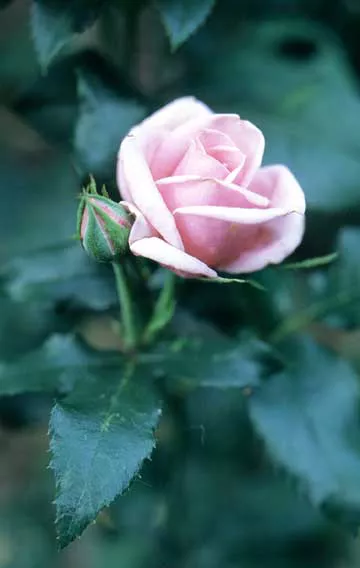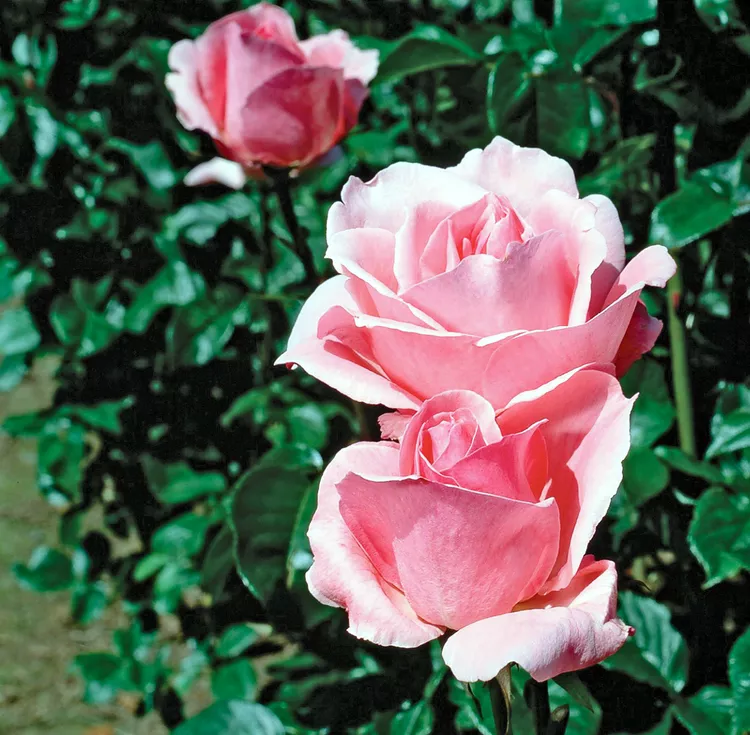
Grandiflora roses add a splash of color (in a wide variety of hues) to the garden, along with their lovely scent. Hardy in Zones 4-9, perennial grandiflora roses are tall and have a fairly sparse growth habit, which makes them fit in well among other perennials and shrubs.
Grandiflora Rose Overview
| Genus Name | Rosa |
| Common Name | Grandiflora Rose |
| Plant Type | Perennial, Rose |
| Light | Sun |
| Height | 4 to 6 feet |
| Width | 2 to 4 feet |
| Flower Color | Orange, Pink, Purple, Red, White, Yellow |
| Foliage Color | Blue/Green |
| Season Features | Summer Bloom |
| Special Features | Cut Flowers, Fragrance |
| Zones | 4, 5, 6, 7, 8, 9 |
| Propagation | Stem Cuttings |
Where to Plant Grandiflora Rose
Plant grandiflora roses in well-drained soil in an area that receives full sun. With anything less than full sun, you increase the probability of numerous problems, including fewer blooms, more stems flopping over, and weak, sparse plants.
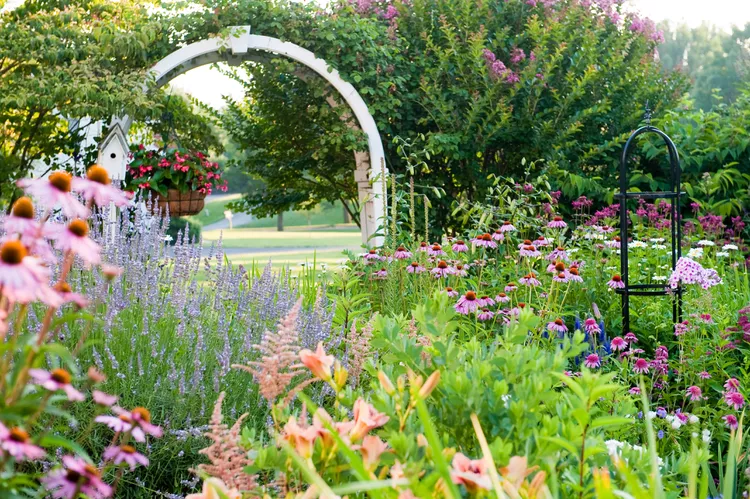
Grandiflora roses are spectacular specimen plants, but their height makes them just as appropriate for the back of mixed borders or rose gardens. With their long stems, they are naturals for inclusion in cutting gardens. If possible, position them so you can enjoy their fragrance throughout the day and into the evening.
How and When to Plant Grandiflora Rose
Plant grandiflora roses after the last frost in spring or no less than six weeks before the first frost in fall to give the plants time to root before going dormant in the winter.
Once you've dug the hole for your rose plant, gently spread the roots over a mound of soil and fill in with the amended soil, filling any gaps and packing down lightly to remove any air pockets around the roots. Make sure the graft union (the bulging knob-like spot near the base of the plant) is buried 1 to 2 inches below the soil level in northern climates and just above the soil in warmer temperatures. Prune back any stalks emerging from below this union; otherwise, you risk the more vigorous rootstock taking over.
Grandiflora roses should be planted 6 feet apart so each plant gets plenty of room to grow and good air circulation to prevent mildew and fungal diseases.
Grandiflora Rose Care Tips
With the right water and sun, grandiflora roses are easy-care plants.
Light
Like all other rose types, grandiflora roses need full sun for at least six hours a day.
Soil and Water
Grandiflora roses should be planted in well-drained, loamy soils with a pH near 7.0. If you have poor soil, amend it by adding a good amount of general-purpose potting mix and peat moss to help lighten it up. Water the roses in the early morning at the base of the plant to avoid getting the flowers and stems wet. This reduces the possibility of diseases. Wait to water until the top 2 inches of soil surrounding the plant is dry, usually about once a week.
Temperature and Humidity
The ideal temperature for grandflora roses is 70ºF. When temperatures regularly go above 80ºF, protect roses from the heat and sun, especially in the afternoon when the sun is strongest. Shade cloth draped loosely over supports (not resting on the roses) gives the plants some protection, as do strategically placed patio umbrellas.
When the weather turns cold, wait for the first hard frost when leaves drop and the temperature falls below freezing to protect your roses from frigid weather. Wrap them with burlap or cover them with soil and leaves or pine straw until spring to prevent them from thawing and refreezing repeatedly throughout the winter.
Fertilizer
Roses are heavy feeders, so plan accordingly; repeat-blooming varieties will be happy with regular doses of fertilizer. Use a slow-release fertilizer every six weeks, mixing it in the top few inches of soil and watering well after applying. For the proper amount to use, follow product label instructions.
Pruning
It's best to prune in late winter before the plants have put on their new spring growth. Remove any old, dead growth and diseased wood. Long, vigorous shoots can be cut back to four to six buds from the base. As plants age and canes thicken, you may need to cut some of the older canes almost back to the ground. This will encourage new growth from the base of the plant and can also increase airflow.
Deadhead roses throughout the season to promote new budding and blooming.
Potting and Repotting Grandiflora Rose
Grandiflora roses need a 15-gallon container for potting. Potting and repotting roses can keep plants growing for many years as long as you repot them when they get too big for their containers. The process of potting and repotting roses is similar to planting them in the ground.
Pests and Problems
Foliar diseases are the biggest problem for many roses, and grandifloras are susceptible to all the most common ones that plague roses. One of the worst is black spot, a fungal disease that causes dark spots on the foliage. In many climates, black spot is almost inevitable for rosebushes. The best thing to do is to be proactive and plant in full sun, prune correctly for good airflow, and avoid getting the foliage wet when possible. Mildews are also troublesome, including powdery and downy varieties. Control these as you would black spot.
Rosette disease is a serious problem that spreads throughout regions. If you suspect this is a problem in your garden, contact Roserosette.org for advice and help.
How to Propagate Grandiflora Rose
Gardeners can propagate roses with stem cuttings of their favorite plants. However, grandiflora roses are grown on grafted rootstocks, and cuttings won't deliver plants with similar disease resistance as the original bush. However, the fragrance and flowers might be similar.
When a rose is patented, propagating it before the patent expires is illegal. However, home gardeners can propagate the vast majority of roses for their enjoyment legally; just check it isn't patented first.
The best plants for propagating roses are relatively new ones with less-woody stems that can be easily cut. Cuttings taken in spring or early summer from the same season's growth and cut immediately beneath a node have the best chance of rooting successfully.
After a stem has bloomed, take a 12-inch cutting from the tip. Remove all buds and leaves except for the top two leaves. Dip the bottom half of the cutting (or more if needed to include two nodes) into rooting hormone. Fill a 6- to 8-inch deep container with garden soil mixed with perlite and poke a hole in the center of the planting medium with a pencil. Put the cutting in the hole, being careful not to rub off much of the rooting powder. Firm the planting medium around the base of the cutting, water it, and cover the entire pot with a clear plastic bag to hold in humidity. Place the container in a warm place with bright light (not full sun) and monitor it to make sure the soil stays moist.
In about two weeks, softwood cuttings will begin to root. Test by removing the plastic bag and gently tugging on the top leaves. Resistance indicates rooting has started. You can also check to see if roots show in the drainage hole. If rooting has started, remove the plastic bag. After the cutting develops a robust root system, it can be planted in the garden.
Gardeners need to be patient with both successful propagation and the time it takes for new plants to grow. Hardwood cuttings take up to two months to root and have a lower success rate than softwood cuttings. Either way, it takes a few years for the plant to flourish.
Types of Grandiflora Rose
'Dick Clark' Rose
Rosa 'Dick Clark' is lauded as a chameleon rose; no two flowers are the same. Black-red buds spiral open to show off creamy pink and magenta flowers. Zones 6-9
'Earth Song' Rose
Rosa 'Earth Song' is an extra-tough grandiflora bred at Iowa State University. Large, clear-pink, urn-shaped blooms begin opening in early summer and continue until frost. The vigorous plant has an upright growth habit with glossy dark green foliage. It grows 5 feet tall and 4 feet wide. Zones 4-9
'Honey Dijon' Rose
Rosa 'Honey Dijon' bears pink, peach, and brown tones that mingle in the porcelain-like blooms. It displays its colors most dramatically in cooler temperatures and has a sweet, fruity fragrance. The tall, vigorous plant grows 4 to 5 feet tall. Zones 5-9
'Maria Shriver' Rose
Rosa 'Maria Shriver' offers large, perfectly formed, cloud-white flowers that open in clusters on long stems and release a citrus-zest fragrance. The plant grows 4 to 5 feet tall. Zones 6-9
'Octoberfest' Rose
Rosa 'Octoberfest' shows a mellow blend of yellow, orange, and red that gives the petals a luminous glow. The semidouble blooms have a moderate fruity fragrance. Plants reach 6 feet tall with an upright growth habit. Zones 5-9
'Radiant Perfume' Rose
Rosa 'Radiant Perfume' is an amazing display of color and fragrance. The big golden-yellow blooms have a citrus scent. Plants reach 5 feet tall and wide. Zones 5-9
'Queen Elizabeth' Rose
Rosa 'Queen Elizabeth' is an award-winning variety that bears elegantly formed, lightly scented, clear-pink blooms. Plants show high disease resistance and hardiness, growing 6 feet tall and 2-1/2 to 3 feet wide with dark green leaves. Zones 5-9
'Tournament of Roses' Rose
Rosa 'Tournament of Roses' boasts beige-pink petals with a satiny texture. The flowers have a light, spicy fragrance. Foliage is disease-resistant on plants that grow 4 to 5 feet tall. Zones 5-9
'Scarlet Knight' Rose
Rosa 'Scarlet Knight' is an award-winning variety with deeply colored and dramatic blooms that start from nearly black buds and unfurl to double crimson flowers with a light old-rose fragrance. Appearing one per stem or in clusters, the blooms hold up well in cut bouquets. Foliage is dark green on tall, upright plants that reach 5 feet tall and 2-1/2 feet wide. Zones 5-9
'Wild Blue Yonder' Rose
Rosa 'Wild Blue Yonder' offers clustered, camellia-like blooms in lavender pink with a heady fragrance of citrus and tea rose. It's an award-winning variety that grows 4 feet tall. Zones 6-9