
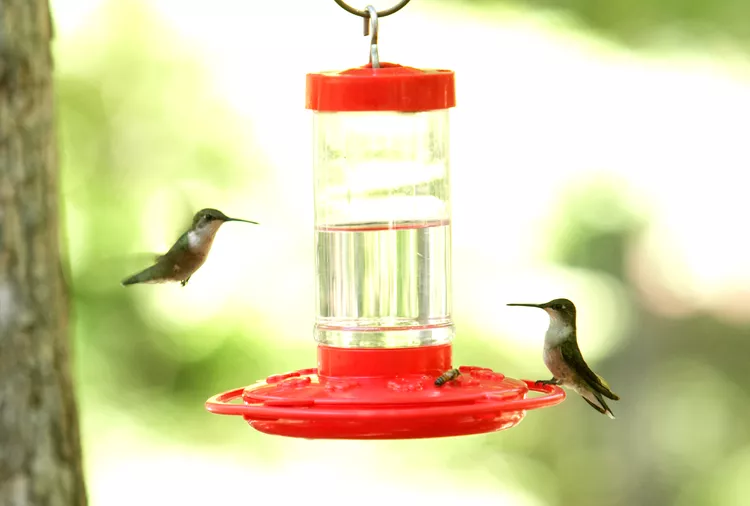
Pinpointing the best time to put out hummingbird feeders in spring will help you prepare for the arrival of hummers as they migrate north. In most areas throughout North America, hummingbirds head south in autumn, spend their winters in Mexico or Central America, and only head north again when the weather warms. When hummingbirds return depends mainly on where you live and the types of hummingbirds that frequent your garden. Here's what you need to know to put your feeders out at the right time to attract these colorful pollinators and encourage them to stick around your garden during the growing season.
Why to Put Out Hummingbird Feeders in Spring
Hummingbirds start migrating north when days begin to lengthen and the sunlight reaches a certain angle. This northern migration generally aligns with the bloom times of spring flowers. When their arrival doesn't align with blooming flowers, hummingbirds can find themselves without reliable food sources unless they encounter a well-placed nectar feeder along the way.
Hummers sometimes arrive in northern gardens earlier than expected, or they may arrive after spring flowers fade—a circumstance becoming increasingly common due to changing climate patterns.
Having nectar feeders out in time for the return of hummingbirds gives hummers much-needed food after their long journey and encourages them to stay in your garden through the coming months. They might not return to gardens that don’t have any flowers or feeders available when they arrive in spring.
Best Time to Put Out Hummingbird Feeders
In areas where hummingbirds migrate south during the winter, it’s best to place hummingbird feeders outdoors about two weeks before hummingbirds are expected to return. This guarantees that any early arrivals have something tasty to eat after their long migration. Male hummingbirds often leave a week or two before female hummingbirds and arrive at destinations a little earlier.
- In the Southeastern U.S., it’s best to place hummingbird feeders outside in February or March.
- Hummingbirds arrive a bit later in the Midwest and Northeastern U.S. and Canada. If you live in these areas, place feeders outdoors in mid-to-late April.
- In many areas of the Southwest, West Coast, and Gulf Coast, certain species of hummingbirds are active year-round, and gardeners can leave feeders up all year in these locations. If frost is expected, bring the feeders indoors at night and place them back outside when the temperature warms.
Tips for Using Hummingbird Feeders
Putting hummingbird feeders outside at the right time is one way to make your garden more enticing to hummers, but if you want to see more hummingbirds and create a pollinator-safe habitat, keep the following tips in mind.
1. Use less nectar in spring.
There aren’t as many hummingbirds early in the year, so you don’t need to fill up your feeders completely. To prevent nectar waste, fill feeders a third of the way up with nectar and add additional nectar as more hummingbirds arrive.
2. Clean feeders regularly.
Hummingbird feeders should be cleaned out twice a week in hot weather and once a week when temperatures are cool. Clean the feeders with hot water, a hummingbird feeder brush, and a diluted vinegar solution (one part vinegar, two parts water). Don’t use soaps or bleach, as these products may harm hummers.
3. Skip red dyes.
Nectar made with synthetic red dye isn’t good for hummingbirds and isn’t necessary if you’re already using a red hummingbird feeder. Instead, select clear hummingbird nectar or make your own hummingbird food with water and refined white sugar.
4. Hang feeders in shade.
Hummingbird feeders can be breeding grounds for bacteria if they’re not cleaned regularly. Hanging feeders in light shade prevents the nectar from spoiling as rapidly, although nectar should be replaced every three to five days.
5. Protect feeders from pests.
Ants and bees can be problematic around hummingbird feeders, but you can keep them away by using an ant moat or distract them by filling a nearby saucer with sugar water. Don’t use petroleum-based products, like petroleum jelly, on hummingbird feeders to deter pests; these products can also harm hummers.
6. Space feeders out.
If you use multiple hummingbird feeders in your garden, space feeders at least 10 feet away from each other. Male hummingbirds are territorial and fight off other males if they see them.
7. Grow native plants.
As useful as hummingbird feeders are, they work best when used in conjunction with nectar-rich plants. Native plants, like cardinal flowers, bee balm, and columbines, are particularly appealing to hummingbirds, and they add lots of color to flower beds.