
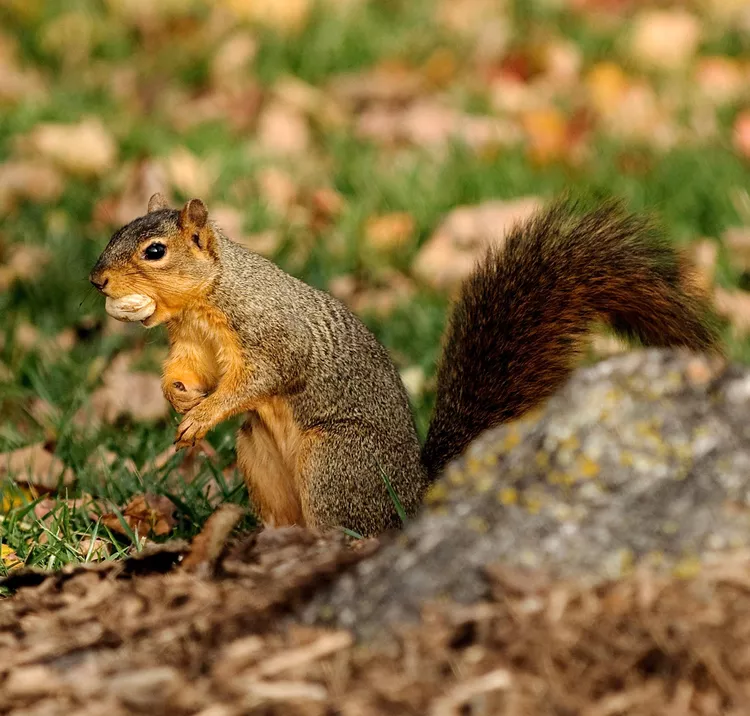
Every gardener likely has a story about squirrels or chipmunks (or maybe even both) making a nuisance of themselves. These cute but mischievous creatures seem to have an affinity for bulbs and containers that can wreak havoc on your carefully planned beds and borders.
Here's how to keep chipmunks out of your garden, along with squirrels, so they don't eat your fruits, flowering plants, and vegetables.
Understand Why Squirrels and Chipmunks Dig
As exasperating as it is to try to stop squirrels from munching on your plants or figure out how to keep chipmunks out of the garden, there are several things we can do to coexist on more friendly terms. First of all, think about why these creatures do what they do. They eat nuts, leaves, berries, roots, and seeds. Generally, there is enough food for them in our backyard habitats, and they don't become pests.
Squirrels spend much of their day burying little food stashes in multiple places around their territory. That's why they often dig into the lovely, soft soil you've just prepared. Chipmunks commonly store their food in one place and are delighted when they happen across a squirrel stash or your bulbs. As you can imagine, when one of these animals finds your bulb plantings, they think they've just arrived at an all-you-can-eat buffet.
Apply Cayenne Pepper or Other Repellent
If you want to know how to keep chipmunks out of your garden and keep squirrels from digging up your bulbs, try cayenne pepper. Available at almost any grocery store, finely ground cayenne pepper can spice up your food and backyard. Sprinkle the soil with cayenne pepper, and you'll have no more dug-up plants. You usually have to reapply the pepper after each rain or after watering containers and borders, but typically, squirrels lose interest after they discover the cayenne pepper and go off to dig somewhere else.
You can also use several repellents marketed specifically for squirrels and chipmunks. These products contain ingredients that don't harm your family or other backyard wildlife. Many gardeners have luck by drenching the soil in plant containers with castor oil repellent, sold for mole control. Other repellents use predator urine to frighten rodents away. These products must be reapplied after a time and certainly after rain.
Avoid Attracting Squirrels and Chipmunks as Much as Possible
The best tip for how to keep chipmunks out of your garden and reduce your yard's appeal to squirrels is to remove food sources such as pet food bowls or move bird seed out of reach. Also, minimize attractive habitat sites such as rock piles or fallen logs. You can also modify your plant choices when you know which species they don't like. For example, squirrels and chipmunks do not like the smell or taste of daffodils. They do, however, love to eat tulip bulbs. Planting daffodils with your other flowering bulbs can help mask the scent of tulips and help protect them.
Protect Bulbs from Digging Creatures
When planting spring flowering bulbs, ensure they're buried at the proper depth. Plant tulips and hyacinths 6 to 8 inches deep. Smaller bulbs, such as crocuses and grape hyacinths, should be planted 3 to 4 inches deep.
Bulb cages (bought or homemade with chicken wire) work well for small plantings. If you have a large area to protect, try covering it with chicken wire after your fall planting is done. Tack down the wire and cover it with a thin layer of mulch to hide it. Remove the barrier in early spring when you see your bulbs coming up.
Provide Water to Protect Your Veggies
In hot, dry summers, squirrels and chipmunks are looking for water, which is when they might get into the birdbath or vegetable garden. Make sure there is a clean water supply for all of the wildlife in your garden, and in turn, they'll leave your tomatoes alone. If you find that squirrels and chipmunks are still eating berries, tomatoes, or anything else you had hoped to harvest, covering plants in heavy-duty garden netting might be your best bet.
Protect Your Yard from Other Critters
Squirrels and chipmunks have another partner in crime—rabbits. To keep rabbits out, fencing is an effective tool, but the best way to keep them from munching on your plants is a dog. Dogs scare rabbits away better than a scarecrow or strobe lights do. Add some rabbit-resistant flowers and plants to keep them away, also. If deer are doe-eyed scavengers in your area, include the best deer-resistant plants in your region to minimize the damage they can do. If you have a skunk problem, lock up your trash cans and take other steps to keep these stinky little guys away.