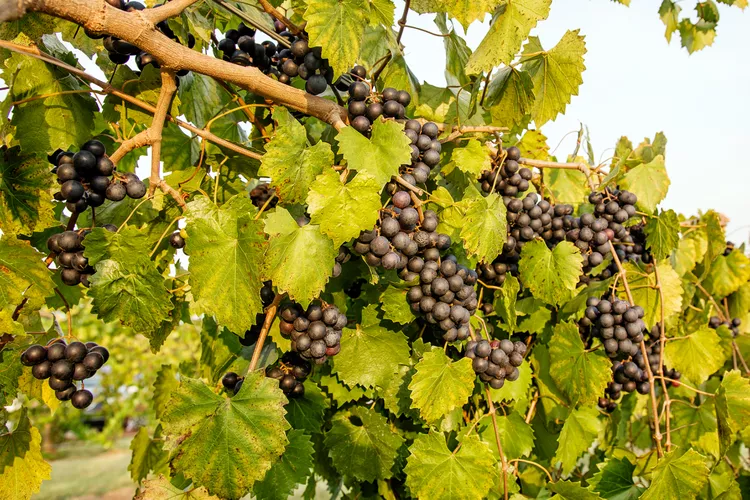
A wild, North American grape variety, muscadine grapes (Vitis rotundafolia) are sometimes called the “South’s favorite grape” thanks to their delicious flavor and high heat tolerance. Muscadine grapes are native to the southeastern and south-central United States, although they can be grown in other warm climates. With thick skins and a sweet and succulent taste, muscadines are multi-purpose grapes that can be eaten fresh or turned into exceptional jams, jellies, dessert wines, and other sweet treats.
Muscadine vines produce an abundance of large, seeded grapes with skins that range in hue from a deep black tone to lighter shades of pink and bronze. Compared to conventional store-bought grapes, muscadines have a soft, melt-in-your-mouth texture. As a native grape variety, muscadine vines tend to be resilient and are hardier in hot weather than many other grape varieties.
Muscadine Grape Overview
| Genus Name | Vitis |
| Common Name | Muscadine Grape |
| Additional Common Names | Scuppernong grape, Southern fox grape |
| Plant Type | Fruit, Vine |
| Light | Sun |
| Height | 12 to 60 feet |
| Width | 8 to 20 feet |
| Flower Color | Green |
| Foliage Color | Blue/Green |
| Special Features | Low Maintenance |
| Zones | 10, 7, 8, 9 |
| Propagation | Layering, Seed, Stem Cuttings |
| Problem Solvers | Drought Tolerant |
Where to Plant Muscadine Grapes
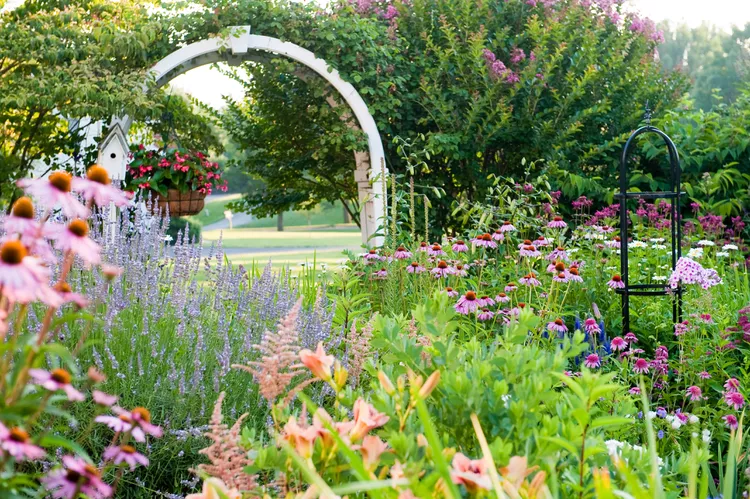
Depending on your available growing space and gardening style, muscadine grapes can be grown in vegetable or fruit gardens or worked into ornamental beds. If you have a large plot, you may want to trellis muscadines in a home arbor, or you can train them to grow up garden archways, pergolas, and tall fences. Just keep in mind that muscadines are large plants that need sturdy support and plenty of space for proper airflow.
Beyond space considerations, muscadine grapes need full sun and deep, well-draining soil that’s rich in organic matter.
How and When to Plant Muscadine Grapes
While muscadine grapes can grow from seeds or cuttings, it’s much quicker and easier to grow them from bare-root nursery starts. The best time to plant bare-root vines is in spring.
Before planting muscadines, select a growing location and do a soil test to see if your garden lacks any particular nutrients. If needed, amend the soil with compost or other amendments, and then install a trellising system. The trellis must be in place before planting the vines to avoid disturbing the plant’s roots later on.
Double-curtain and one-wire trellises are often used with muscadine grapes, but you can try other options, such as cattle panel trellising. Each muscadine grape vine should have at least 20 feet of trellising. If you want to grow multiple rows of grape vines, space each row at least 12 feet apart.
To plant bare-root muscadine grapes, dig a hole that’s as deep as the plant’s root ball and about twice as wide, approximately 1 foot away from the trellising system. Position the plant’s roots in the hole so that the top of the roots is about 1 inch below the soil line, and fan out the vine’s roots so they’re evenly spaced. After that, backfill the hole with soil and give the newly planted vine a deep drink of water.
Muscadine Grape Care Tips
As a native plant, muscadine grapes are relatively easy to care for, but they need regular maintenance throughout the growing season to keep them looking and growing their best. If you’re new to growing grapes, the following tips can set you up for success.
Light
Muscadine grapes love lots of bright sun and need at least 6 to 8 hours of bright light daily. When grown in shade, muscadines spread aggressively in search of light.
Soil and Water
All plants need quality soil to grow properly, and muscadines are no exception. Muscadine grapes grow best in deep, well-draining soil amended with organic matter. They prefer slightly acidic soils with a pH of between 6.0 and 6.5. Before planting the vines, it’s a good idea to amend the soil with compost, aged manure, or other amendments and work those additives into the top 10 inches of the garden soil.
Once established, muscadine grapes are drought tolerant, but young and fruiting vines should be regularly watered with about 1 inch of water weekly. Never let muscadines sit in soggy soil, as this can promote root rot and other issues.
Temperature and Humidity
Muscadine grapes are heat-tolerant plants that grow best in USDA Zones 7-10. While these plants can handle the occasional cold spell, they don’t tolerate areas where temperatures regularly dip into the single digits. They do well in areas with high humidity.
Fertilizer
During the first year of growth, muscadine grapes should be fertilized with a half pound of balanced, 10-10-10 fertilizer spread out in a 2-foot diameter around the base of the plant. Then reapply fertilizer in the same manner at 6-week intervals through mid-July.
The following year, repeat this process but use 1 pound of fertilizer and spread it out in a 4-foot diameter around the plant’s base. After the vines are established, broadcast 3–5 pounds of balanced 10-10-10 fertilizer around the plants once a year in March.
Additionally, as grape vines can be prone to magnesium deficiencies, you may want to add Epsom salt around the plants once a year in spring. For young plants, apply 2 to 4 ounces of Epsom salt in a 4-foot diameter; use 4 to 6 ounces for established vines. Test the soil every three years to make sure the plants are receiving the nutrition they need.
Pruning
Pruning grape vines is essential for their growth, and it helps your plants produce more grapes and reduces fungal issues. To prune muscadine vines, snip away all but the strongest stem of the vine after planting, and then train this vine to trail up the trellis using clips or garden twine. After that, prune the vines annually, snipping away all but the most vigorous canes and removing any damaged, weak or broken vines with pruners or loppers.
Harvesting
Unlike other grapes, muscadine grapes don’t ripen all at once. Instead, grapes begin to mature individually around the end of summer. You’ll know muscadine grapes are ready to pick when their skins develop a deep, rich color and the grapes are easy to pluck from the vine.
Pests and Problems
Muscadines are hardy plants that are naturally resistant to many common diseases, including downy mildew. However, as sturdy as these plants are, they can still be susceptible to certain pests and diseases.
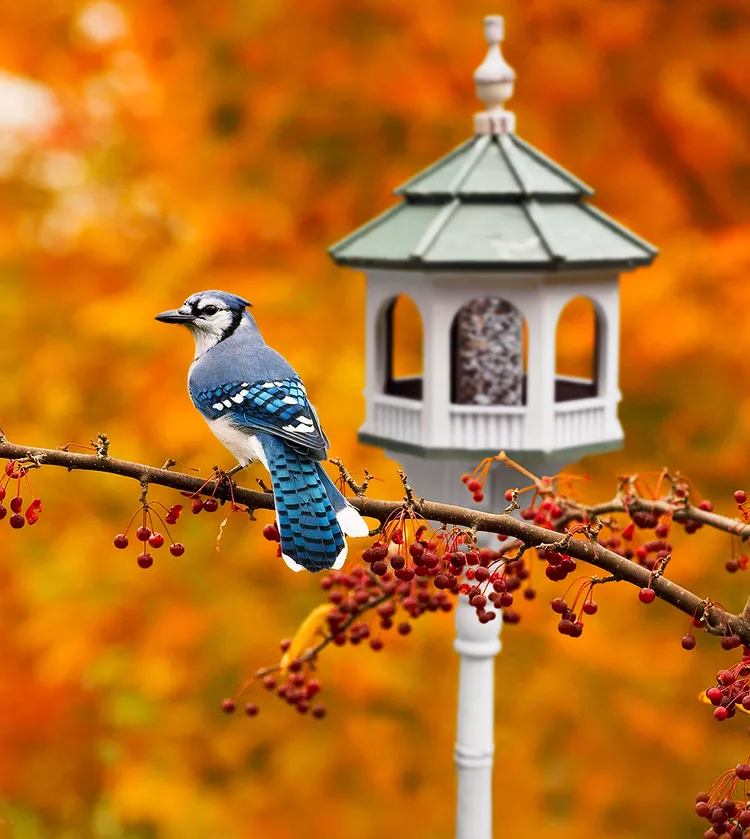
Most of the time, birds are welcome visitors in the garden, but they can sometimes damage fruit crops. To protect your vines from foraging birds, consider adding fruit protection bags over the grapes and installing a bird bath if you have the space. Birds often gobble up fruit while they’re on the hunt for water.
Powdery mildew is a common plant disease that can affect many different crops, including muscadine grapes. Affected plants develop a white, powdery film on their leaves, causing their growth to be stunted. Ensuring that plants are properly spaced and pruning the vines to enhance airflow are two easy ways to prevent mildew issues.
How to Propagate Muscadine Grapes
Muscadine grapes can be propagated by layering, stem cuttings, or seeds.
Layering: In summer, bend a healthy vine to the ground and bury part of it in the soil near the plant, leaving the tip of the vine above the ground. Place a stone or brick on top of the buried section to keep it in the ground. After the vine does dormant, use a sharp spade to cut the vine near where it enters the ground. Lift the buried portion and immediately replant it in a different location or, if it is large enough, divide it into sections before replanting.
Stem cuttings: Take softwood cuttings when the vine is actively growing in summer. Cut 6 inches from a growing tip and remove the leaves from the bottom half of the cutting. Dip it in rooting hormone and insert the bottom portion into a small peat pot filled with a moist, sterile potting medium. Cover the pot and cutting with a clear plastic bag to retain moisture and place it in a somewhat bright area, but not in full sun. Check it daily and water it as needed. In four to six weeks, the cutting should show new growth, indicating it has rooted. Move it outside to a protected area for a week or two, protecting it from full sun, before transplanting it to its permanent location.
Seeds: Remove the seeds from the fruit and rinse them off in water before putting them on a paper towel for a day to dry thoroughly. Place the seeds in a plastic bag with damp peat moss and put the bag in the refrigerator for about three months. Fill a 4-inch peat pot with potting soil or a soilless mix and sow two or three seeds in the pot; cover the seeds with 1/4 inch of soil. Place the pot in a warm area—75°F is ideal— that receives bright, indirect light, and mist it occasionally until germination occurs in about three weeks. As they grow, transfer each seedling to a 6-inch pot, where it will stay for an entire year before it is ready to be transplanted outdoors.
It is illegal in the U.S. to propagate patented plants. Check the plant's tag for patent information or consult a local horticultural expert before propagating your plant.
Types of Muscadine Grapes
There are at least 100 varieties of muscadine grapes to choose from, including varieties with green, bronze, pink, purple and black skin. Some muscadine varieties are self-fertile, while others need multiple vines to fruit. Here are a few favorite muscadine types, but you may find other cultivars you love even more.
‘Carlos’
Often used in commercial farming, fast-growing Vitis rotundafolia ‘Carlos’ is one of the most productive muscadine varieties, and it is self-pollinating. The grapes, which are a bronze color, are delicious to eat and excellent for making wine. 'Carlos' has greater cold tolerance than most other types. It is not a patented cultivar. Zones 7-10
‘Alachua’
A top choice among market growers, Vitis rotundafolia ‘Alachua’ is a self-fertile muscadine variety that produces large clusters of grapes with gorgeous, purple-toned skins. It displays good disease resistance and has a strong muscadine flavor. 'Alachua' is not patented. Zones 7-10
'Supreme'
Fast-growing Vitis rotundafolia ‘Supreme' produces very large, dark purple grapes that are extremely sweet. It grows in southern Georgia and surrounding areas but doesn't thrive outside the South. It isn't as cold-tolerant as other grapes, and it is not self-pollinating. 'Supreme' is a patented cultivar. Zones 8-10