Including indoor vining plants in your houseplant collection brings a touch of wildness into your home. Many types of plants shoot out vining stems to creep up a wall or bookshelf, from delicate creeping figs to hefty monsteras. This article includes suggestions for popular vining houseplants, plus expert tips on how to use them to make a room feel like an appealing indoor jungle.
- Maryah Greene is a plant stylist and owner of Greene Piece boutique plant service in Brooklyn.
- Emily O’Gwin is a medicinal and tropical plant gardener at the U.S. Botanic Garden in Washington, D.C.
Decorating with Indoor Vining Plants
“Vining plants make a space more natural, more inviting,” says Maryah Greene, a plant stylist who owns Greene Piece, a boutique plant service in Brooklyn that helps people choose and care for houseplants.
Greene uses vining plants to shape an interior space by accentuating some areas of a room and hiding others. “Use the vines to draw the eye where you want it to go and away from where you don’t want the eye to go,” she says. Greene uses vining plants to hide radiators. “I create a canvas of vines right above the radiator, on a shelf or the wall, so your eyes look at the vines instead.”
Greene also uses vines to make the ceilings in a room look taller by training vines to grow up a wall, drawing the eyes to the ceiling. “Plants make the illusion that the walls and ceilings are taller than they really are. It’s a cheap way to make a room look bigger.”
Emily O’Gwin, medicinal and tropical plant gardener at the U.S. Botanic Garden in Washington, D.C., says vining plants bring whimsy to a room. “Vining plants, trailing out of a container or up a wall look more anthropomorphic, almost like a creature instead of a plant. They bring a wow factor to a space,” O’Gwin says.
Here are some of the best indoor vining plants to get you started.
Arrowhead Vine
Named for its distinctively-shaped leaves, arrowhead vine (Syngonium podophyllym) is a fast-growing tropical vine that thrives as a houseplant. Give it plenty of bright, indirect light, consistently moist soil, and warm, humid conditions, and the plant will grow vines up to 6 feet long. Train it to grow up a moss pole or a small trellis to give a room a dramatic jungle look.
Arrowhead vine varieties come in several colors and patterns. For example, 'Pink Splash’ features hot pink streaks on deep green leaves, and ‘Snow White’, has white speckles on deep green leaves.
Climbing Onion
Climbing onion (Bowiea volubilis) isn’t an onion, but it grows vining stems from a big bulb reminiscent of an onion sticking up out of the soil, hence its name. Climbing onion is a member of the lily family and hails from South Africa. If you are looking for a plant that will help you jump on the hortifuturism wave, this is a good pick because it looks like a Star Trek prop.
As an indoor vining plant, it practically thrives on neglect. Just put it in a spot where it gets direct sunlight, give it a small trellis or moss pole, and in later winter, it will sprout lacy vines that climb up the supports. It stays small, with the vines growing to around 16 inches long. The vines die back in the fall, and it goes dormant.
Creeping Fig
Creeping fig (Ficus pumila), also known as climbing fig, is an indoor vining plant that looks delicate but actually makes a sturdy houseplant–at least for a while. Even with the ideal care, climbing fig lasts only a few years but you can use cuttings to start new plants.
Creeping fig is a vining cousin to woody ficus varieties like fiddle leaf fig and rubber plants. Plant it in a container or terrarium, and vines of tiny, glossy, heart-shaped leaves that mature into leathery, oval leaves will spill over the sides. This eager climber pulls itself up a trellis. It likes bright, indirect light, consistent moisture, and humid air.
English Ivy
If cottage garden is more your style than tropical jungle, consider English ivy (Hedera helix). It brings a classic look to a space, Greene says.
“It’s a bit on the finicky side but it looks beautiful, has a clean shape, and it looks great with brass accents,” she adds.
Variegated English ivy can also bring other hues to a room besides green. Train English ivy to grow on a small trellis or topiary for a sophisticated look. Choose small-leafed, slow-growing varieties that are easier to maintain in a pot and give it bright light.
Grape Ivy
Grape ivy (Cissus rhombifolia) is an old-fashioned, easy-to-grow vining plant. It can go for days without water and looks lovely in hanging baskets or containers on shelves or plant stands, where its vines can cascade. You can also train its vines to grow on a trellis or moss pole. Put it in a spot where it gets medium to bright light, plant it in well-drained soil, and water it when it’s dry. It will grow vines up to 3 feet long.
Heartleaf Philodendron
Commonly known as the sweetheart plant, heartleaf philodendron (Philodendron hederaceum) is a popular indoor vining plant because it’s easy to care for and fast-growing. Its leaves are dark green at maturity but bronze-colored when they first emerge from the stems; variegated varieties have a two-tone effect on each leaf.
Heartleaf philodendron can grow vines 3 to 13 feet long indoors when given optimum growing conditions. These include bright indirect light, consistently moist and well-drained soil, and humid conditions.
Hoya
The hoya plant (Hoya carnosa), also known as a wax plant due to its thick, waxy leaves, is a fast-growing tropical vine that can grow up to 8 feet long.
“They’re in between a tropical and a succulent, so they are easy to grow,” Greene says.
“They are really low maintenance,” O’Gwin agrees. “They are great for indoors because you can hang them up in a basket, and you won’t have to take the basket down every couple of days to water it.”
Give a hoya six hours a day of indirect but bright light, but don’t overwater it. Set it on a bookshelf or plant stand, wrap its vines on picture frames or shelves, and your hoya will slowly twine up them. Hoya doesn’t bloom often, but when it does, the flowers have a sweet scent.
Lipstick Vine
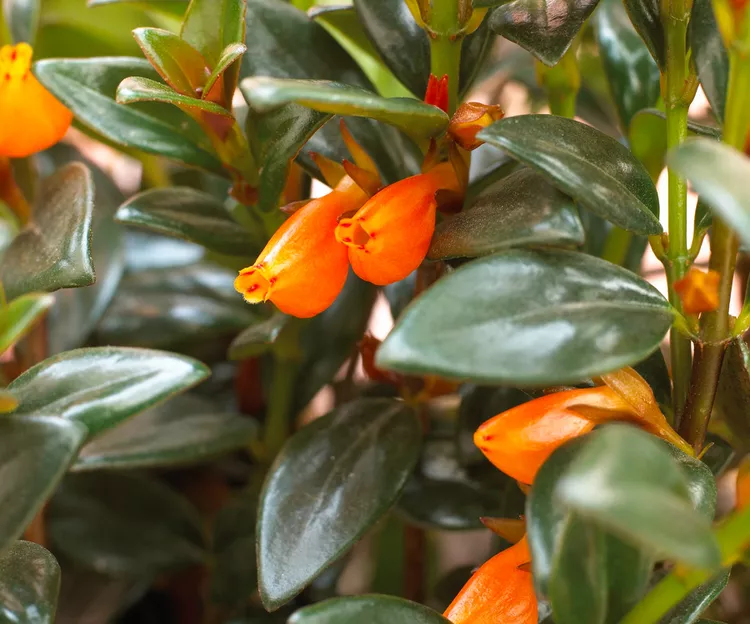
Named for its vibrant red tubular flowers, lipstick plant (Aeschynatus radicans) is a colorful indoor vining plant. In its native Malaysia and China, it’s an epiphytic plant that grows in tree branches and cracks in rocks and gets its nutrients from the air.
When growing it as a houseplant, use a well-drained potting mix, orchid mix, or any chunky potting mix. Given the right conditions—bright, filtered light, humidity, and warmth—lipstick plant will produce red flowers and deep green leaves on 3-foot-long vines for most of the year. Mist its leaves regularly to keep it healthy.
Monstera
Monstera (Monstera deliciosa) is so popular that its big leaves have become the avatar for tropical plants. O'Gwin points out that some people don't realize monstera is actually a vine. Most people keep their monstera pruned like an upright plant, but in the wild, monstera grows up the sides of trees as tall as 50 feet (15-20 feet indoors).
“You can let a monstera grow all the way up a wall,” O’Gwin says. She does not recommend letting your monstera grow up an indoor wall, however. “They’re heavy and can damage the drywall,” O’Gwin says.
Instead, O'Gwin suggests training your indoor monstera to grow on a trellis, stake, or moss pole. “The moss retains moisture the plant needs and allows its aerial roots to grow into the pole. The vines will attach themselves, or you can loosely tie them with twine.”
Mini Monstera
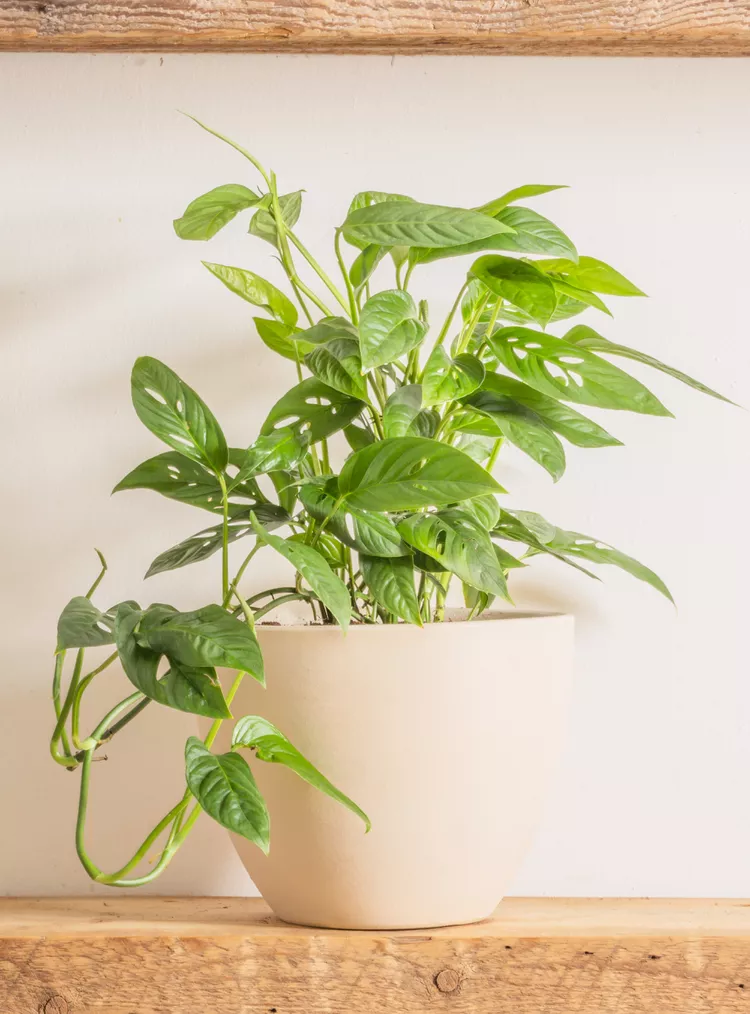
Its official name is Rhaphidophora tetrasperma, but most people call this vining plant mini monstera because it looks like a smaller version of monstera, everybody’s favorite big-leafed tropical. Mini monstera has elegant split leaves and can be trained to grow up walls, shelves, or moss poles.
“Mini monstera looks like an art piece,” Greene says. “They’re fun to put in homes, because they elevate the look of any room.”
Given the right conditions—several hours a day of bright, indirect light and consistently moist soil—mini monstera can grow vines up to 8 feet long indoors, less than half the size of the lookalike giant Monstera deliciosa.
Pothos
Pothos (Epipremnum aureum) is easy to care for and fast-growing, so you can have vines trailing down a stair railing fast with minimal effort.
“I put these in my clients’ homes when they are looking for instant gratification and when they are trying to fill out a space with a vining look,” Greene says. “Pothos grows quickly, and it’s very forgiving.”
Pothos can grow in low light conditions, so it’s a go-to indoor vining plant for homes where natural light is scarce. It's a trailing vine, not a creeping one, so its stems grow downward, not upward. This means pothos stems cannot hold themselves up. You’ll need to guide the vines over and around objects like picture frames or stair railings. They’ll do the rest, growing leafy, sturdy vines that reach up to 10 feet indoors.
Satin Pothos
Satin pothos (Scindapsus pictus) has heart-shaped green leaves splotched with silver and gray variegation. Technically, this plant is not a pothos, but it is in the same plant family as its pothos cousins, and it’s just as easy to grow.
Give it bright, indirect light and consistent moisture. Keep it warm and humid, and it will grow vines up to 10 feet long. Let its vines spill over the side of a hanging basket or train it to grow up a trellis, moss pole, or bookshelf.
String of Hearts
String of hearts (Ceropegia woodii) is a vine that has thin purple stems and tiny, heart-shaped leaves in colors ranging from variegated green and white to cream and pink. A string of hearts plant produces deep magenta flowers once a year.
“It’s really delicate looking, with the leaves looking like tiny buttons on a vine,” O’Gwin says. “This is one of my favorites because it’s so easy to grow. I water it once a month, and it’s easy to get it to flower.” She adds it’s a great beginner houseplant. “You can really ignore it.”
The tiny leaves of string of hearts contrast nicely when displayed alongside big-leafed tropicals like monstera and pothos. Indoors, string of hearts needs up to six hours a day of bright, indirect light. Its vines can reach 10 to 12 feet in the right conditions and grow up to a foot a year. You can let its vines dangle out of a pot or train them to grow up a trellis.
Swiss Cheese Vine
Swiss cheese vine, also called Adanson’s monstera (Monstera adansonii), is a fast-growing tropical vine that thrives as a houseplant, just like its cousin, Monstera deliciosa. Swiss cheese plants have heart-shaped leaves laced with holes. It grows aerial roots to support itself as it climbs. Give your Swiss cheese vine plenty of bright, indirect light. Keep it consistently moist and use a well-draining potting mix. Indoors, Swiss cheese plant grows vines 3 to 8 feet long.
“Swiss cheese vines are a good pick if you want a monstera but don’t have room for a giant plant,” O’Gwin says.
String of Pearls
The string of pearls succulent vine (Curio rowleyanus) looks like a necklace because its bubble-shaped leaves resemble beads strung on its long, vining stems. It thrives as a houseplant when given bright but indirect sunlight and a splash of water here and there. Those bead-like leaves store water so this plant doesn't need frequent watering.
In its native South Africa, string of pearls grows as a groundcover, but in a container it will cascade over the sides of the pot. Place it in an eastern or southern window, on top of a shelf, or in a hanging basket, and it will be at its best.
Vanilla Bean Orchid
The vanilla bean orchid (Vanilla planifolia) is a vining plant that grows the vanilla beans used in baking. This epiphytic tropical makes a beautiful houseplant, but it’s a bit harder to grow than a pothos. Plant it in chunky potting soil—an orchid mix works—and give it warmth, humidity, and bright, indirect light. In the wild, vanilla bean vine grows up to 100 feet long, but it stays much smaller when grown indoors.
This vining orchid is a slow grower that needs a moss pole or support of some sort that it can attach itself to as it grows. In ideal growing conditions, this vine will eventually produce gorgeous yellow orchid flowers. To produce the bean pods coveted by bakers, you need to hand-pollinate the plant. So be happy with the shiny green leaves, dramatic vines, and the occasional flower.