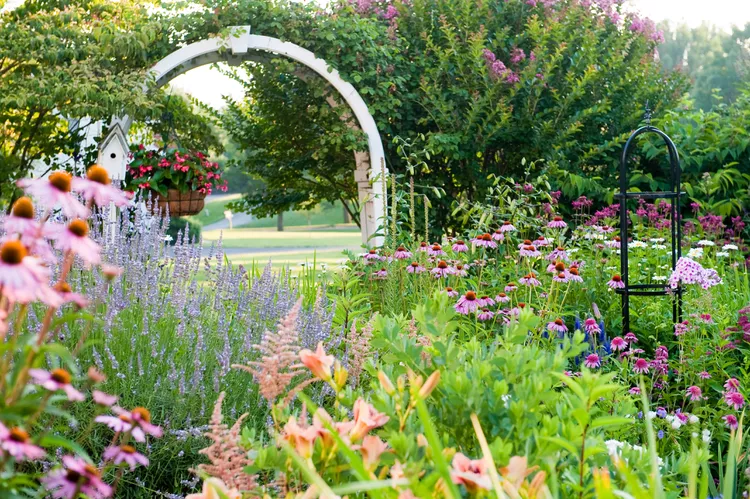
There’s something about old-fashioned flowers—like roses, peonies, and hydrangeas—that makes the heart happy. “There’s a trend toward nostalgia and comfort plants,” says Katie Tamony, chief marketing officer of Monrovia nursery. “People are drawn to plants that remind them of simpler times." The trick is choosing versions of these plants that are adapted to today's conditions, allowing you to have a granny garden that thrives in a 21st-century world.
- Katie Tamony is the chief marketing officer at Monrovia and a former editor-in-chief of Sunset Magazine.
- Lisa Lacy is the director of product management for PanAmerican Seed.
New-and-Improved Versions of Nostalgic Plants
While old-fashioned plants may provide a link to the past or call to mind a traditional English garden, some older cultivars are not great garden plants by today's standards. Some don't bloom prolifically. Some don’t have much disease resistance or pest resistance. Some grow too big and rangy for a suburban yard because they hail from an era when people tended to have more land. Some have been declared invasive.
In many cases, too, the climate has changed since an heirloom plant’s introduction, so growing conditions may no longer be ideal for them. “Plants have to be able to tolerate dry conditions and all sorts of extreme conditions,” says Lisa Lacy, director of product management for PanAmerican Seed. “They also have to be resistant to pests that are more prevalent due to a changing climate.”
That's where these new versions of old-fashioned plants come in. With these varieties, you can have your dreamy, nostalgic landscape and your disease-resistance and heat-resistance, too.
Lilacs
Lilacs are one of spring’s classic blooming shrubs. Thomas Jefferson grew lilacs, and Walt Whitman wrote about them. While older varieties of lilacs can grow to the size of small trees, too big for the typical suburban yard, ‘Little Darling’ lilac (shown here) is a dwarf that grows just 4 feet tall. You can grow it in a container or a small yard. ‘Little Darling’ blooms twice a year, once in the spring and again in the fall and only needs light pruning.
Also consider:
‘Angel White’ lilac is a low-chill variety that can grow in climates with mild winters. Most lilacs need a long period of cold for buds to mature and bloom the following spring, which is a problem in areas where winters are not very cold. 'Angel White' and cultivars like ‘Lavender Lady’, ‘Blue Skies’ and ‘Old Glory’ have been bred for warmer zones up to Zone 8. These varieties are also bred to resist powdery mildew that's prevalent in warmer, wetter climates.
Hydrangeas
Hydrangea is a classic flowering shrub that comes in lots of colors, flower forms, and sizes. The new Seaside Serenade series features big, showy blooms on bushy, compact shrubs under 3 feet tall and wide. They have stronger stems, more repeat blooms, and longer-lasting flowers than many other hydrangea varieties.
The nine varieties in the Seaside Serenade series are named for coastal areas. There’s ‘Martha’s Vineyard’, a pink-red mophead; ‘Cape Cod’, a deep blue mophead if you acidify the soil; ‘Bar Harbor’, a white mophead (shown here) that looks like a mini Annabelle hydrangea; and ‘Glacier Bay’, a white lacecap with dramatic black stems.
Also consider:
‘Pop Star’ is a newer member of the Endless Summer hydrangea series. It's a lacecap type that has electric blue flowers on very sturdy, compact stems that don't flop. It's very disease resistant and reblooms through the season. 'Pop Star' also is hardier than many other bigleaf hydrangeas, reliably coming back after the winter in colder regions and blooming profusely.
Begonias
Begonias were all the rage in the Victorian era and are having a moment again now. Check out Tectonic begonias, a series developed by plantsman Dan Hinkley. Most Tectonic series begonias come from the forests of India, so they thrive in hotter, more humid conditions than other begonias. Their exotic, tropical-looking leaves come in striking shapes, patterns, and colors, including emerald green, red, silver, and burgundy.
‘Shangri-La’ (shown here) a standout in the Tectonic series. It is a woodland perennial in USDA Zones 8–11 that hails from China. 'Shangri-La' is gorgeous and tough, with toothy leaves speckled in silvery white speckles and held aloft on velvety red stems. “There’s so much to love about this plant!” Tamony says. “The crinkly leaves, the two-toned underside, the graphic pattern on dark leaves.”
Also consider:
‘Silver Treasure’ begonia has otherworldly silver foliage with burgundy undersides. It’s a perennial in Zone 8–11, so it’s more cold-hardy than some begonias. This begonia endures heat, too. Reaching just 14 inches in height, it’s a good pick for container gardens and small yards.
Zinnias
This beloved annual flower is colorful, cheerful, and easy to grow. However, most older zinnia varieties are prone to powdery mildew, a problem becoming more common as regions of the country experience extreme heat. Old-time zinnia varieties are big plants that grow up to 4 feet tall, so they’re better suited to a country garden than a suburban cul-de-sac.
‘Zahara’ zinnias (shown here) are disease-resistant and stay smaller than other varieties, reaching 16 to 20 inches tall. 'Zahara' zinnias come in a range of colors and can have single or double blooms that are solid-colored, or two-tone. “They are an outstanding performer in heat and drought,” Lacy says. They’re resistant to leaf spot and powdery mildew.
Also consider:
‘Oklahoma’ is an update to a classic variety. This generation of ‘Oklahoma’ zinnias is less susceptible to powdery mildew and has smaller blooms, which won’t snap the stems like heavier flower heads do.
Forsythia
Forsythia is a harbinger of spring, bringing yellow flowers to the gray winter landscape when nothing else is blooming, but this popular old-fashioned shrub can grow too large for small yards.
‘Show Off Starlet’ (shown here) is a new dwarf forsythia that grows bright yellow flowers from the base of the shrub to the tip of the limbs on 3-foot-high plant. You’ll get more flowers than stems and won’t need to do more than light annual pruning to keep it doing its thing.
Also consider:
‘Springshine’ is another dwarf forsythia that is covered with blooms in earliest spring. It stays compact, growing just 2 feet tall and 3 feet wide, so it’s perfect for small-space gardening. It’s drought tolerant and grows slowly, so needs little pruning.
Forsythia is considered invasive in some parts of the country so check your local invasive plant lists before planting.
Roses
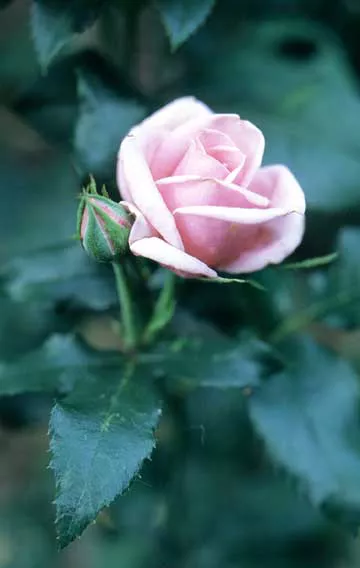
Roses lead the pack in our desire for nostalgic flowers. “There’s been a real resurgence in roses,” Tamony says. “They have a reputation for being difficult and fussy, but new varieties have the performance that people are looking for and the disease-resistance that makes them easier to grow.” ‘Grace N’ Grit’ roses (shown here) are a line of shrub roses bred to grow in heat and humidity and to resist diseases that come with those hot conditions.
“The name says it all,” Tamony says. “These are tough, tough roses.” This line is self-cleaning, which means the blooms drop when they fade and die. No tedious deadheading for you.
Also consider:
‘Eau de Parfum’ shrub roses have a sweet fragrance, unlike many modern cultivars that sacrifice aroma for disease and climate resistance. ‘Eau de Parfum’ roses are tough and fragrant, and they stay a compact 4 feet tall.
‘Heavenly Ascent’ roses are a series of fragrant climbing roses with good disease tolerance. Unlike many old-fashioned climbers that grow up to 15 feet tall, ‘Heavenly Ascent’ roses top out at 8 feet, which is better for small-space gardening.
Peony
Romantic peonies come in three basic types: tree, herbaceous, and Itoh. Of the three, the Itoh peonies, also known as intersectional peonies, are the best suited for modern gardens. A cross between tree peonies and garden peonies, they have strong stems, so they don’t need to be staked. Thanks to those tree peony genes, Itohs are also resistant to beetles, powdery mildew, peony blight, and botrytis.
Hybridized Itoh peonies are also tougher than the herbaceous peonies that grew in 19th-century gardens, so they are a good pick for extreme climate conditions. Popular Itoh peony varieties include ‘Garden Treasure’, ‘Singing in the Rain’, and ‘Keiko’ (shown here).
Marigolds
A staple of Mexican and Indian cultures, as well as many American gardens, marigolds grow from 5 inches tall to 4 feet tall, depending on the species. They can be prone to rot, blight, and mildew.
‘Fireball’ marigolds are dwarf French marigolds that grow just a foot tall, so they fit in containers or small beds, making them ideal for small modern gardens. 'Fireball' marigolds pack a lot of flower power, producing a profusion of double blooms that open in a rich shade of red, and then age to orange, bronze, and gold.
Also consider:
‘Taishan Gold’ African marigolds (shown here) have strong stems that hold up better to wet, stormy weather than other varieties. They grow just a foot tall and 10 inches wide, perfect for containers or small flower beds.
Coneflowers
Echinacea, aka coneflower, is a garden classic, but a hotter, wetter climate has made it more difficult to grow because it is prone to powdery mildew. New varieties are disease-resistant and come in a wide range of colors.
“New echinacea varieties have more compact and sturdy stems,” Tamony says. “Many have multiple hues of blooms on one plant.” The Kismet series of coneflowers (like 'Kismet Raspberry' shown here) has large flowers on short stems, growing just 18 inches tall, half the size of older varieties of coneflowers, so they fit into a contemporary garden. This series is more tolerant of drought and humidity than older varieties of coneflower.
Also consider:
Prima ‘Tiger’ coneflower is a hybrid packed with orange and red bi-color flowers. This short, compact variety grows just 16 inches tall and is hardy in Zones 4-9. It’s more resistant to heat, humidity, and drought than older coneflower varieties.
Lavender
Lavender prefers hot, dry, sunny conditions and poor soil similar to its native Mediterranean climate, so growing it in colder, wetter places can be tricky. ‘Javelin Forte’ (shown here) tolerates cold and wet better than most lavender varieties. This variety of Spanish lavender produces a profusion of deep purple blooms on a compact 14-inch plant and is hardy in Zones 7–9.
Also consider:
‘Phenomenal’ is a French lavender hybrid that thrives in hot, humid climates in Zones 4-9. It has good resistance to powdery mildew and is extremely cold-hardy. Heat, cold, humidity—you name it—this plant can take it.
‘Ghostly Princess’ lavender has pink blooms on striking silvery foliage. “It’s more modern looking than other lavenders,” Tamony says. Bred in Australia, it is hardy in Zone 8-10, so it can take more heat than many lavenders, but it’s susceptible to root rot if its soil is too heavy.
Spirea
Spirea is an old landscape staple, but some types can get monstrously large, up to 6 feet tall and 10 feet wide. Try ‘Butterscotch Baby’ spirea (shown here), which stays super compact, just 18 inches tall and 24 inches wide, and provides three seasons of color. Its leaves are caramel in the spring and fall, and in the summer, it produces pink blooms that attract pollinators. ‘Butterscotch Baby’ needs only maintenance pruning; you will never have to take a pruning saw and hack off 3-inch diameter limbs that have stopped blooming.
Also consider:
‘Double Play Doozie’ spirea is a compact shrub that grows just 3 feet tall and 3 feet wide. It produces deep red foliage in early spring, followed by purple-red flowers in the late spring and early summer. It produces no seeds, so it won’t spread willy-nilly. It’s also drought-tolerant and disease-resistant.
Japanese spirea is invasive in much of the eastern half of the U.S. so check your local invasive plant lists before planting.