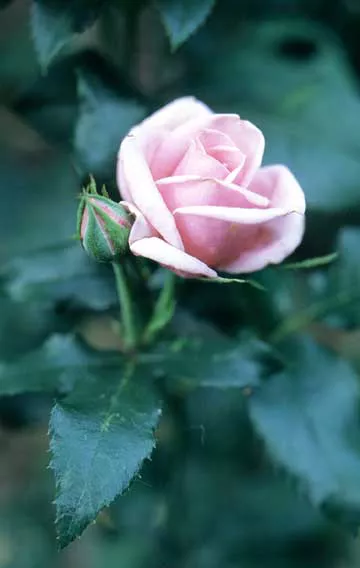
English roses (a series of shrub roses sometimes called David Austin roses for the breeder who developed them) are some of the most fragrant flowers available. Their double blossoms are a cross between old-fashioned and modern ones, combining their sweet fragrance with lush colors.
English roses are hardy in Zones 5-9 and have a better habit than many older types. They fit in among perennials, often becoming the star of the garden. You can find English roses in a variety of colors, from traditional soft pinks and whites to vibrant corals, oranges, and yellows. Petal counts of these roses are substantial—some of the largest you'll find. Many of the English roses also rebloom.
English Rose Overview
| Genus Name | Rosa |
| Common Name | English Rose |
| Plant Type | Rose |
| Light | Part Sun, Sun |
| Height | 1 to 3 feet |
| Width | 2 to 5 feet |
| Flower Color | Orange, Pink, Purple, Red, White, Yellow |
| Foliage Color | Blue/Green |
| Season Features | Fall Bloom, Reblooming, Spring Bloom, Summer Bloom |
| Special Features | Cut Flowers, Fragrance, Good for Containers |
| Zones | 4, 5, 6, 7, 8, 9 |
| Propagation | Layering, Stem Cuttings |
| Problem Solvers | Slope/Erosion Control |
Where to Plant English Rose
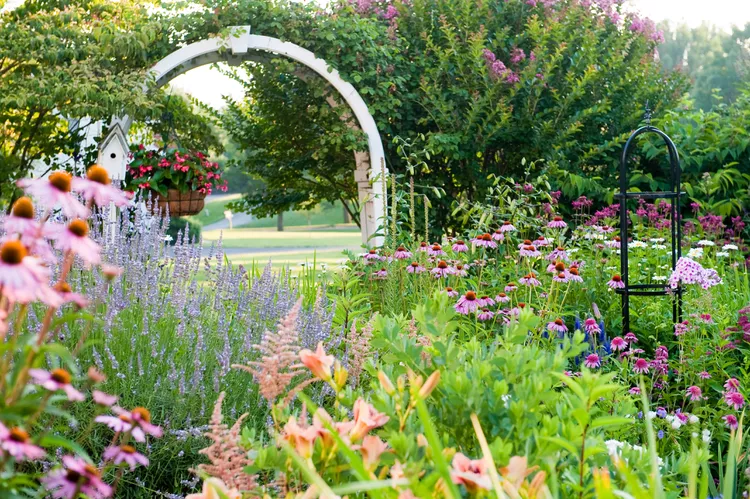
Plant English roses along walkways, near seating areas, or any place their scent can be enjoyed. Allow plenty of clearance so the shrubs don’t snag passersby with their thorns. They also need lots of sunlight to thrive, so take care not to plant them too close to trees or structures that will prevent them from getting the sunlight they need.
If your space allows, plant three English roses together in a triangular formation. You can plant them as close as 1 foot apart for this grouping, and when they grow, they will mesh together as one large, lovely shrub. Otherwise, plant your English roses at least 3 feet apart.
When and How to Plant English Rose
Potted English roses can be planted after the last frost in the spring or six weeks before the first frost in the fall. If you plant early enough in the fall, the roots will have time to get established before going dormant for the winter. The hole you dig should be large enough to accommodate the entire root system. It should be approximately twice the width of the pot and slightly deeper. Once the plant is in the ground, fill in with soil and compost, making sure the bud unions at the base of the plant are at ground level in mild climates and 2 to 3 inches below ground level in colder climates.
Bare-root English roses should be planted in early spring or as early as January, depending on your hardiness zone. If you are in Zones 8 or higher, you can wait until mid- to late winter if the danger of frost has passed. The critical thing to remember is that bare-root roses should be planted as soon as possible after you acquire them and are typically sold when it is safe to plant them.
Place your bare-root rose in a bucket of water for at least two hours to rehydrate the roots. Dig a hole at least 12 to 18 inches deep and 2 feet wide, and place the plant in the center, spreading the roots evenly around. Fill in the hole with soil and compost, ensuring the rootstock is below the soil's surface and any grafted points (or bud unions) are at least 1 inch above the soil line in warm climates and 1 inch below in cooler climates. Water the plant thoroughly around the base of the rose and add a layer of mulch to help keep the soil moist.
English Rose Care Tips
Along with being prolific bloomers, English roses are relatively low maintenance.
Light
English roses perform best in full sun. This produces the largest and biggest number of blossoms while preventing any foliar diseases. However, English roses do well in part sun, particularly in warmer climates where sheltered afternoon sun keeps them cool during the heat of the day and also helps create the most intense fragrance.
Soil and Water
English roses require well-drained soil to thrive. If your ground has clay components or is packed tightly, loosen it up about a foot into your hole to improve drainage. Without proper drainage, your English rose's roots will likely become waterlogged and rot.
Water your roses regularly to keep them healthy (at least once or twice a week in most regions). Most shrub-type and container-grown English roses will want about 1 to 2 inches (or approximately a gallon) with each watering, but go slow and allow the water to gradually soak in. Direct your water in a soft spray or trickle at the base of the plant to avoid getting leaves and buds wet, which can result in fungal diseases. Climbing varieties, new plants, and roses planted in sandy soil may need more frequent watering.
Temperature and Humidity
Humid temperatures may mean your roses need less water, so only add extra water if they droop. Pests are also more active in summer weather, so watch for spider mites and scale as temperatures rise.
English roses are fairly tolerant of wintery weather but could do with some extra care—mainly if you live in a cooler Zone. Let your roses go into dormancy in November and December, and once freezing temperatures hit, build a mound of soil, compost, and leaves over the base of the plant to keep it uniformly cold but protected from fluctuating temperatures. Come January and February, when temperatures are in the teens and twenties, you can give them a good prune (to about one-third their size), but wait to remove the mound until new growth begins in the spring.
Fertilizer
If your garden has rich soil or you regularly amend it with compost or other forms of organic matter, you may not need to feed your roses. That said, feeding your roses once or twice a year will encourage abundant flowering—especially if you are growing a reblooming variety. Give your roses some granular fertilizer at the beginning of the growing season and, for reblooming varieties, another dose after the first bloom cycle finishes.
If you're growing roses in containers, use an all-purpose fertilizer, but be careful not to overfeed, which can damage your plants.
Pruning
English roses benefit from regular pruning to keep them looking their best while encouraging healthy flowers. Prune in late winter, just before new growth emerges. A general rule is to prune your rose back by about one-third of its height to maintain its current size and shape. You can prune more or less depending on how large you want your shrub to grow. You can also prune after the initial wave of blossoms to help hasten along a second set of flowers.
Potting and Repotting English Rose
Potting roses can keep plants growing for many years, as long as you repot them when they get too big for their containers. Potting and repotting roses is similar to planting them in the ground.
Pests and Problems
English roses are sometimes billed as disease-resistant, and while some varieties are less prone to issues with black spots and powdery mildew, they still have their share of problems—particularly in humid climates like the southern United States. English roses are particularly prone to fungal diseases, so it's best to avoid overwatering, prune when necessary, and remove dead or dying branches from the surrounding soil. Air circulation around your plant can help prevent powdery mildew and black spot fungus from developing.
Regarding pests, look out for aphids, Japanese beetles, mites, thrips, scale, rose leafhoppers, and slugs. Deer are also likely to eat your roses when given a chance, so fence off your plants if they're in your area.
How to Propagate English Rose
Propagating roses from cuttings is a popular method, but you'll need to be patient. You also may get very different results with plants propagated from clippings, as most roses are grown from grafted plants.
If you wish to do it, take a cutting in late spring or summer from a young plant or an area of an older plant with the least woody stems (Woody stems will slow the progress of rooting, so success is less likely.). Using clean, sharp shears, cut at a 45-degree angle below the leaf node and remove any buds from the cutting. Dip the cutting in rooting powder and poke it into a small pot with a well-draining potting mix. Cover the entire pot in a plastic bag and set it near a window with indirect light for three to four weeks. If the plant is successful, you can plant it in your garden in the late fall.
It should also be noted that propagating some varieties of roses, particularly David Austin roses, may be illegal. Watch for IP (intellectual property) information on the plant’s tags, in nursery catalogs, or online.
Types of English Rose
'Gertrude Jekyll' Rose
Rosa 'Gertrude Jekyll' offers rich magenta blooms that unfold from fringed buds on an upright, vigorous plant. The flower fragrance is a rich antique rose perfume. Plants can be maintained as tall shrubs or encouraged to climb to 10 feet. Otherwise, it grows to 5-6 feet tall. This reliable variety is hardy in Zones 5-9.
'Graham Thomas' Rose
This variety of Rosa bears warm peachy-yellow blooms that appear in clusters and have the enticing scent of antique roses and a hint of violets. This vigorous variety grows to 5 feet tall and 4 feet wide as a pruned shrub rose or 12 feet tall as a climber. Zones 4-9
'Heritage' Rose
Rosa 'Heritage' features huge, pale pink blooms with a sweet combination scent of fruit, honey, and carnation. They appear continuously through the season on the rounded, shrubby plant. It grows to 5 feet tall and 4 feet wide as a shrub or 7 feet if allowed to climb. Zones 5-9
'Mary Rose' Rose
This particular rose is an early bloomer that produces full, ruffled double flowers in a sweet pink permeated with an antique rose, honey, and almond fragrance. The plant forms a dense shrub that grows 4 feet tall and wide. Zones 4-9
'Mary Magdalene' Rose
Rosa 'Mary Magdalene' bears apricot-pink petals around a central button in a flower style called a rosette. The double blooms have a sweet tea-rose scent. This variety grows to 3 feet tall and wide. Zones 5-9
'Jean Giono' Rose
This Rosa selection is a French-bred variety that produces full, double blooms packed with spice-scented golden-yellow petals with tangerine centers. The foliage is a shiny dark green. The plants grow 4-5 feet tall and are hardy to Zone 5, with winter protection.
'The Dark Lady' Rose
Rosa 'The Dark Lady' bears large, crinkled blooms that blend shades of red and violet and unfurl on a plant that spreads slightly and grows to 4 feet tall and wide. Zones 5-9
'St. Swithun' Rose
This variety of Rosa bears bowl-shaped, frilled blooms in clear pink, redolent of myrrh, that appear on a vigorous plant with climbing tendencies. The canes can be pruned to maintain a medium shrub rose shape or encouraged to climb to 8 feet. The plant is covered with disease-resistant foliage and grows 5 feet tall and 4 feet wide. Zones 5-9
'Othello' Rose
Rosa 'Othello' features fully double, dusky crimson flowers that repeat throughout the summer and contrast with the dark green foliage. They have a strong, antique rose fragrance. This variety is thorny and very hardy. It grows to 5 feet tall and 4 feet wide. Zones 5-9
'The Prince' Rose
Rosa 'The Prince' produces cupped rosettes of deep crimson that darken to a mysterious shade of dusky purple. They possess a strong antique rose fragrance. The plant is a good repeat bloomer and compact, reaching 2-1/2 feet tall and wide. Zones 5-9
Garden Plan for English Roses
Summer-Blooming Shade Garden
Choose a spot in your yard that gets at least a few hours of sun a day for this easy-care, summer-blooming shade garden plan, and sub in your favorite English roses for the shrub roses.